Rummy How-To: Teach a New Player With an Open Hand
Teaching rummy is easier when the learner can see the reasoning process. In an open-hand round, everyone agrees that one player’s cards may be discussed. The purpose is not to find the perfect move every time. It is to connect legal actions with the information available before the action.
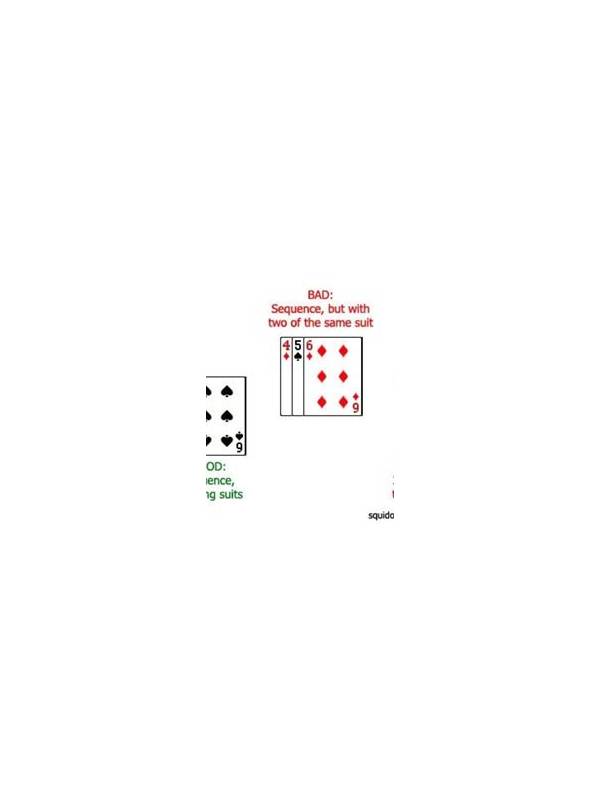
Begin with a small rules summary. Explain the draw and discard sequence, the definition of a legal group, the scoring direction, and how the round ends. Use the actual cards to show one valid sequence and one valid set. Also show a tempting arrangement that is not legal under your rules. Concrete examples are easier to remember than a long speech.
On each teaching turn, ask the learner to name three things: a group that is already stable, a card that has more than one possible use, and a card with no current connection. Then ask what new information the draw provides. Only after that should you discuss candidate discards. This order teaches observation before recommendation.
Keep alternatives visible. If two moves are reasonable, compare their next-step requirements instead of declaring one correct. Say, for example, that one discard preserves two routes while another lowers penalty immediately. The learner then sees that strategy is often a choice between risks, not a secret answer known in advance.
Close every round with one review question: “Which belief changed?” Avoid replaying every mistake. A beginner who associates every loss with failure may stop experimenting, while a learner who can name a changed belief builds a useful habit. After several open-hand rounds, play a normal round and let the learner explain only their own plan. Gradually remove the support while keeping the same observation routine.
Choose teaching examples that contain ordinary tradeoffs. A hand with one obvious winning arrangement teaches memorization, while a hand with two plausible routes teaches judgment. Let the learner make the discard before explaining your own preference, and ask what evidence would change their mind. If the house rules include scoring complications, postpone those until the basic turn rhythm is comfortable. Rotate the open hand among players so the learner sees that different people organize the same cards differently.
Let questions guide the learner toward evidence rather than toward your preferred move.
A player count is a planning condition, not a reason to assume that one format rewards one style forever.
Let the learner explain the choice afterward; explanation reveals understanding more reliably than a correct guess.
Related Post

Rummy Comparison: Known Cards Versus Assumed Cards
Separating visible evidence from assumptions improves decisions about draws, discards, and incomplete groups. [...]
Rummy Tips: Use a Stoplight System for Hand Review
A red, yellow, and green review system offers a quick way to classify the condition [...]