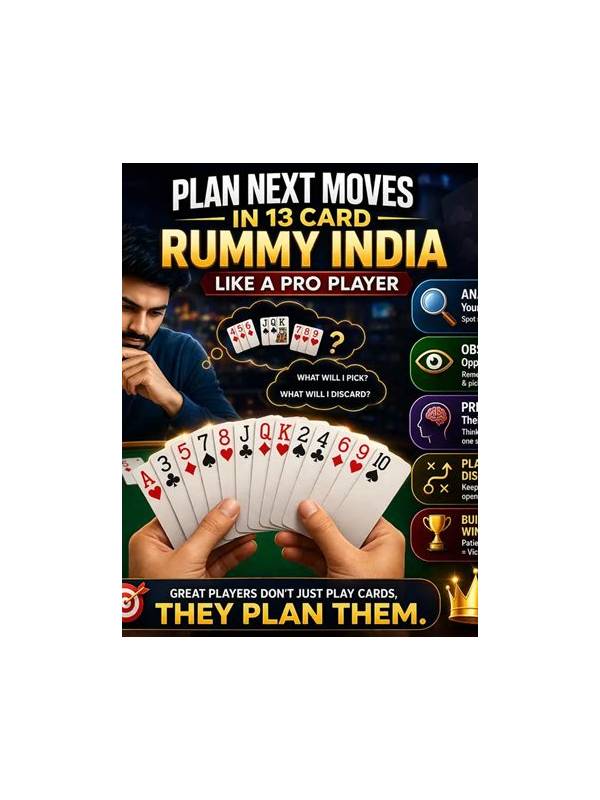
Rummy Comparison: Holding a Pair or a Connector
Holding a pair and holding a connector are both familiar rummy decisions. A pair offers a direct group possibility, while a connector can become part of a sequence from either side. Neither choice is automatically better. The right answer depends on what the rest of the hand is asking you to build.
Begin by examining neighboring cards. A connector supported by one card on each side has more immediate potential than a lonely connector. A pair supported by another pair or a same-suit sequence may also be valuable. Count actual companions, not theoretical ones. “This could work” is weaker evidence than two cards already pointing toward the same arrangement.
Then compare flexibility. A pair often needs one matching rank, while a connector may need one of two neighboring ranks. However, a connector can be suit-specific, and one of its outs may already be visible. A pair may be easier to protect if matching cards are not appearing elsewhere. Public information can therefore reverse the initial comparison.
Consider the discard you will need if the draw fails. Keeping a pair may leave a high unmatched card that increases risk. Keeping the connector may preserve a second route and allow a low-cost discard. Look at the whole hand after each imagined choice, not just the two cards being compared.
Finally, set a review point. If the pair has not gained support after a few turns, reconsider it. If the connector loses both neighbors, reconsider it too. A choice is healthy when it improves the hand now and leaves a reasonable next decision. This comparison habit is more reliable than following a universal rule about pairs or connectors.
Timing can settle a close case. Early in a round, a flexible connector may deserve extra value because there is time to find either neighbor. Later, a completed pair may be preferable if it reduces immediate uncertainty and leaves a clear discard. The same two cards can therefore deserve different treatment at different moments. Include round stage, point risk, and visible cards in the comparison, then commit to the option that gives your next turn the clearest purpose. If the comparison remains close, choose the option with the cheaper failed outcome. Recovery value is often more important than a small theoretical advantage. This is particularly important when a pair and connector share a high card. Keeping both without a deadline can freeze the entire hand and make every later discard more expensive.
Related Post
Rummy Tips: Record the Reason Before the Result
Improve post-game learning by writing down the reason for a rummy choice before seeing what [...]
Rummy FAQ: What Should You Do After a Disconnected Draw?
A disconnected draw is a cue to rescan the hand, not proof that the round [...]