Rummy Tips: Use a Route Map for Unfinished Cards
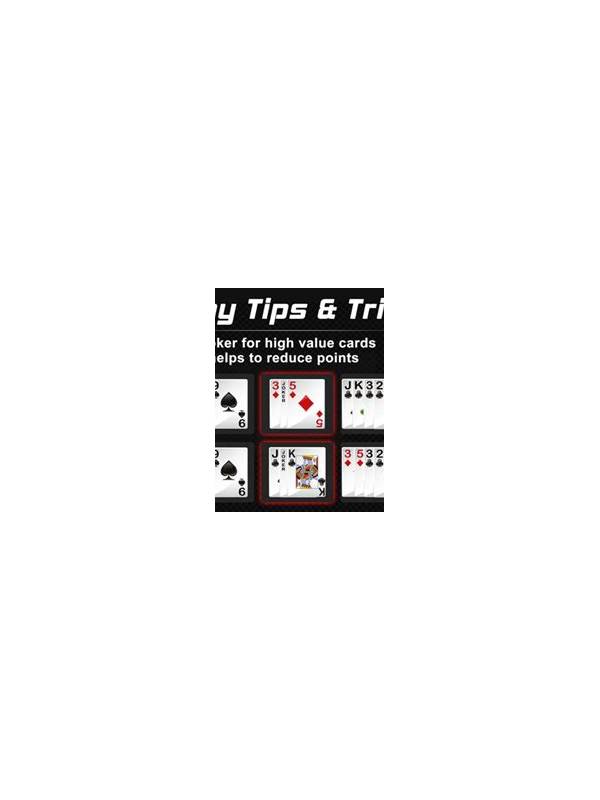
A route map is a compact way to describe unfinished work in a rummy hand. Instead of seeing ten separate cards, mark the possible destinations for each card. The map does not predict the next draw. It shows how many plans a card supports and where plans overlap.
For each ungrouped card, list one or two realistic routes. A same-suit neighboring card may point toward a sequence. A matching-rank card may point toward a set. Stop at realistic routes; listing every mathematically possible combination creates noise. If a card has no credible destination, mark it as isolated.
Look for overlaps. Two cards may share the same missing rank, or one joker may be needed by two different groups. Overlap can be helpful because a single draw may improve several cards. It can also be a bottleneck when competing plans depend on the same scarce resource. Keep the route with better legal progress and a stronger backup.
Use the map to choose a discard. An isolated card is an obvious candidate, but a card with one weak route may also be expendable if another card has two strong routes. When discarding from a pair, check whether it removes a route for the partner. When discarding from a near-sequence, check whether you are breaking the only flexible connection.
Update the map after meaningful events. A new draw adds routes; a visible discard may reduce them. An opponent taking a card from the open pile is evidence about that card’s relevance, not proof of a specific meld. Keep the map probabilistic and revise it without frustration.
The route map is most useful when it stays brief. Three active routes are usually easier to manage than seven. If every card has a different imagined future, you are probably preserving too much. Choose the routes that reduce unfinished work soonest while keeping at least one fallback. This turns hand reading into a manageable comparison rather than a search through every possibility.
You can keep the map on paper during offline practice, using arrows from a card to a missing rank or matching suit. In live play, a mental version is enough. The value comes from seeing competition between routes. When an arrow has no realistic destination, erase it. Removing dead possibilities is often more useful than inventing one more hopeful connection. Reviewing the map after each meaningful draw keeps the method practical and current. It also prevents an early guess from quietly controlling every later discard.
Related Post

A Rummy Glossary for Common Declaration Mistakes
Clear definitions of common rummy terms can prevent avoidable errors at the declaration stage. [...]
Rummy Comparison: Visual Sorting and Mental Sorting
Compare visual and mental card sorting to choose a method that keeps decisions accurate. [...]