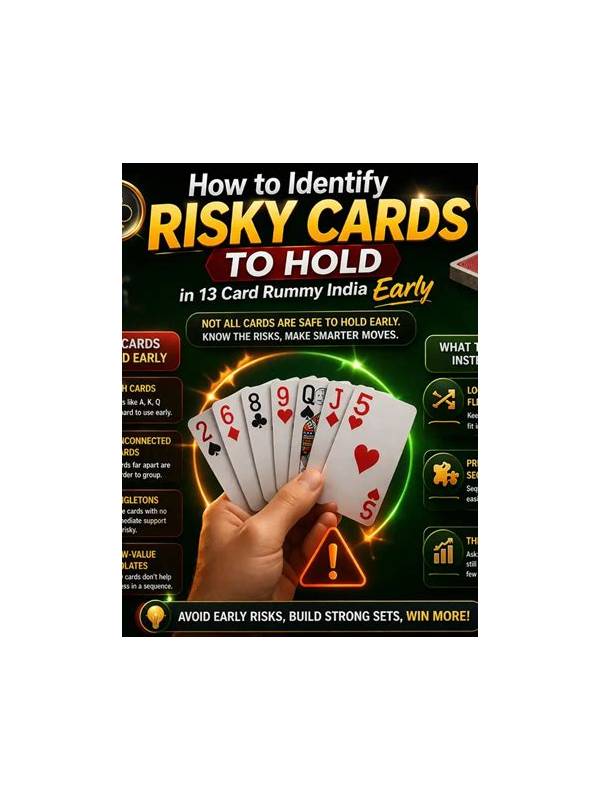
Rummy Tips: Estimate Draw Value Without Chasing Exact Odds
Players sometimes treat every possible card as equally helpful. That makes a hand look more promising than it really is. You do not need exact probability calculations to improve the assessment. Instead, classify each needed card by how many useful outcomes it represents and how much the hand suffers if it never arrives.
Begin with the number of live connections. A middle card may connect to several ranks in the same suit, while an edge card often has fewer neighbors. A pair has a different kind of value because it may become a set through cards of the same rank. Write down the specific cards that would improve each unfinished group rather than saying that a group is merely “close.” Specificity prevents wishful thinking.
Now separate broad, narrow, and duplicated needs. A broad need has several distinct cards that help. A narrow need has only one or two plausible cards. A duplicated need overlaps with another plan, so the same draw may improve two groups. Broad and duplicated needs deserve attention, but they should not automatically control the hand. A high-value improvement can still be poor if it requires holding too many unrelated cards.
Consider timing. A draw that is useful now may lose value after several turns because another player could complete a relevant arrangement first. Conversely, a flexible card may remain useful while you wait. Give each unfinished group a rough label such as “many outs,” “few outs,” or “uncertain.” Recheck the label after every visible discard and after each change to your own hand.
Use the categories to compare actions. If taking from the discard pile helps a broad route but openly reveals your intention, compare that cost with drawing from the stock. If both choices are narrow, prefer the one that leaves a better fallback. The goal is not to predict the exact next card. It is to rank possibilities honestly, reduce unnecessary commitments, and discard cards whose imagined value depends on a single lucky outcome.
This approach is especially helpful after an exciting draw. Excitement can make one improvement feel decisive even when it leaves the rest of the hand awkward. Name the improvement, then inspect what remains. A draw has high practical value only when it improves the whole arrangement or creates a credible next step. Otherwise, treat it as one piece of evidence and continue comparing routes. This keeps enthusiasm from becoming an unexamined commitment.
Related Post
Rummy Strategy: Evaluate a Joker’s Opportunity Cost
Thinking about what a joker prevents you from doing can lead to better decisions than [...]
Rummy Table Timing: How to Use a Turn Timer Wisely
Rummy Table Timing: How to Use a Turn Timer Wisely offers practical guidance for clearer, [...]