Rummy How-To: Record a Hand With Symbols Instead of Long Notes
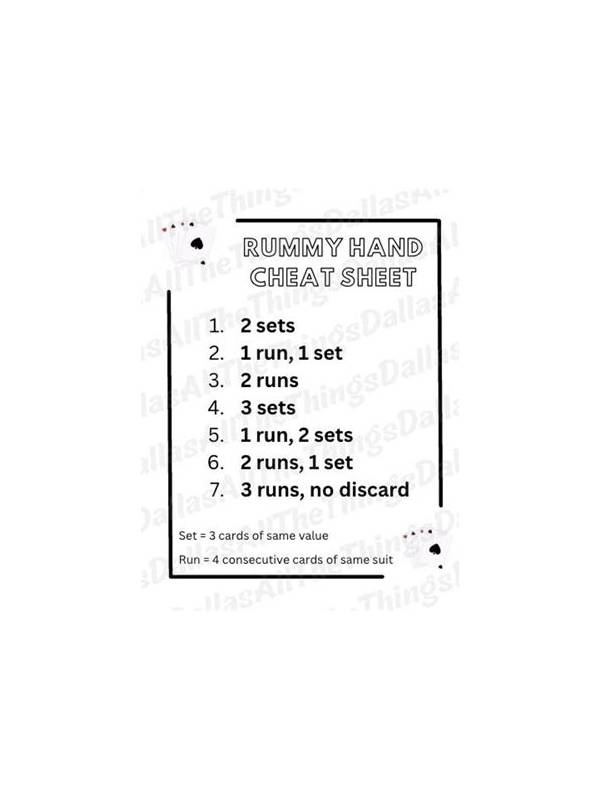
Long written notes are difficult to maintain during practice. A compact symbol system can capture the shape of a hand, the reason for a discard, and the point where your plan changed. The purpose is not to create a secret code for live play. It is to make later review accurate enough that you can learn from decisions rather than from a vague memory of the result.
Choose symbols with only one meaning each. For example, use S for a sequence idea, T for a set idea, J for a joker assignment, and D for a discard. Add a question mark when the idea is uncertain and a star when a group is already secure under the table’s rules. Keep the vocabulary small. If you need a paragraph to explain a symbol, replace it with ordinary words.
Record the opening in one line. You might write “S? hearts, T clubs, J open, D high card.” This says that the hand has a tentative suited route, a rank-based route, an unassigned joker, and a likely deadwood target. After each important turn, record only the change: “S+,” “T-,” or “J→hearts.” The arrow shows a reassignment, while plus and minus indicate improvement or deterioration.
Add a reason code when you discard. Useful codes include H for high-point reduction, F for preserving flexibility, I for information denial, and C for clearing a crowded slot. A line such as “D: 9♣, F” is more valuable than “discarded 9♣” because it preserves your intention. If the decision was forced or uncertain, mark it explicitly rather than inventing confidence later.
At the end, write one sentence about the earliest irreversible choice. During review, compare that choice with the alternatives you actually saw at the time. Avoid judging it solely by whether the hand won. A concise record should answer three questions: what routes existed, what changed, and why did I act? Once the system feels natural, adapt its symbols to your own language while keeping definitions stable.
Review the notes soon after play while the decisions are still fresh. Look for repeated reason codes, such as frequent forced discards or repeated uncertainty around jokers. Those patterns are more useful than a single dramatic mistake. If a symbol becomes ambiguous, revise its definition and use the revised meaning from the next hand onward. Consistency matters more than elegance in a personal notation system. Even a rough record is useful when its meanings remain stable across several hands.
Related Post
Rummy Discard Pile Signals Without Overreading Them
The discard pile offers useful clues, but disciplined observation is safer than assuming you know [...]
Rummy Comparison: Point Reduction Versus Completion Speed
Reducing penalty points and finishing groups solve different problems, so the better priority changes with [...]