Rummy FAQ: Why Can Two Equal Cards Have Different Jobs?
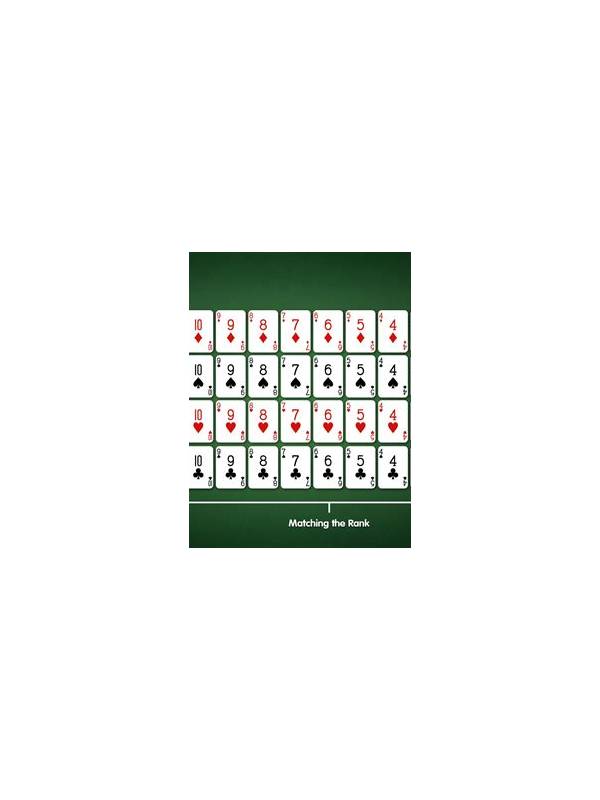
Why are equal-value cards not always equal?
The printed number is a starting point, not a complete evaluation, and the comparison should stay grounded in the actual hand.
The printed number is a starting point, not a complete evaluation.
Point value is only one part of a card’s role. Two cards with the same number may differ by suit, position, and connection to the groups already in your hand. One might complete a sequence with a single arrival, while the other is isolated. They can also differ in how many future routes they preserve.
What should I compare?
Start with current use. Does the card belong to a confirmed sequence or set? Next, compare near uses. How many legal groups could it join without borrowing a card from another strong group? Then consider cost. If the cards are tied in points, flexibility and structural impact become more important. A middle card may connect to more neighboring ranks, but it is not automatically better if the relevant suit cards are already unavailable.
Also inspect duplication. A second card of the same rank may complete a set route, yet it may be less useful than a suited connector if your hand lacks a pure sequence. Conversely, a connector can be misleading when it requires several exact arrivals. The job comes from the whole hand, not the printed number.
Can two copies be interchangeable?
Sometimes, especially when both have identical roles and neither affects a confirmed group. In that case, choose the copy that leaves your arrangement easiest to read. But do not assume interchangeability before checking the table’s joker and duplicate-card rules. Physical or digital decks may handle duplicates differently by variant.
How can I practice this idea?
Practice also with cards that share a suit and then with cards that share a rank. Describe the future work created by keeping each card. A card can have many theoretical uses but only one practical use in the current hand, so judge the next few turns rather than an imaginary perfect draw sequence.
Take a random hand and select two cards with equal points. For each, write one sentence beginning “If I keep this card, it protects…” and another beginning “If I discard it, I lose…” Compare the sentences without considering the eventual result. Repeat with several hands. The exercise teaches you to evaluate function rather than label. When two equal cards truly have the same job, your decision becomes simpler; when they do not, the difference becomes visible.
Related Post
Rummy Practice: Explain a Discard in Three Sentences
A three-sentence explanation drill reveals whether a rummy discard was based on structure, risk, and [...]
Rummy Guide: Make a Pre-Declaration Validation Pass
A repeatable validation pass checks structure, rules, and card ownership before you declare a rummy [...]