Rummy Guide: Read the Discard Pile as a Timeline
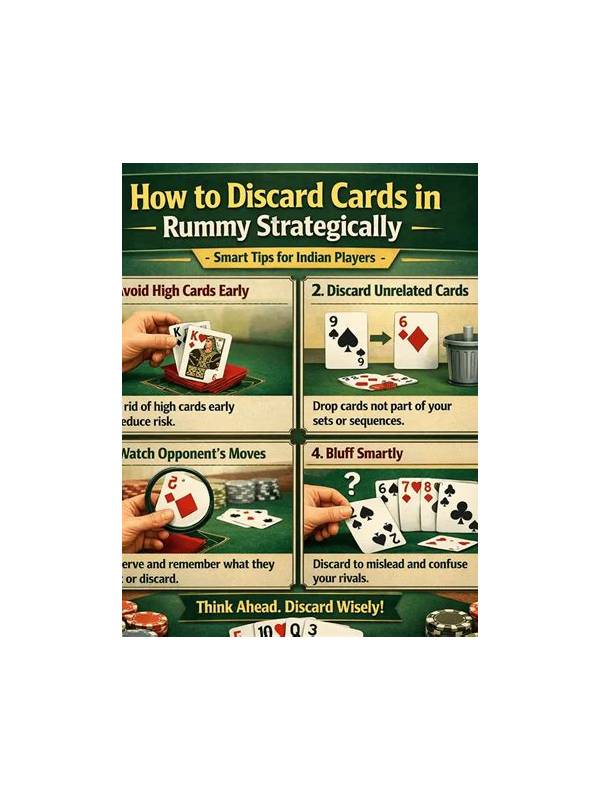
The discard pile is more than a place where unwanted cards collect. It is a short record of decisions made during the hand. Reading it as a timeline can improve awareness without requiring perfect prediction. The goal is not to guess another player’s entire hand. It is to notice what has changed and let that information influence your next choice.
Start by observing the most recent cards. A fresh discard is usually more informative than an old one because it reflects a current plan. Ask whether the card completes an obvious group for you, whether it connects with cards you have already seen, and whether taking it would force you to abandon a better structure. This quick check prevents automatic pickups.
Next, scan backward for connected ranks or suits. If several nearby cards have appeared, the visible sequence may be shrinking, or another player may have been waiting for one of them. The pattern is not proof of anyone’s holding; it is simply a reason to adjust the value you assign to an unseen card. A card that looked promising at the start may now be less attractive because its useful neighbors are gone.
It also helps to divide the pile into three time bands: recent, middle, and old. Recent cards deserve the most attention. Middle cards provide context, while old cards are mainly useful when they connect to a specific plan. This avoids spending too much time trying to memorize every discard. You need a practical summary, not a perfect transcript.
Before drawing, state your reason in one sentence: “I am taking this because it creates a sequence and leaves my other groups flexible.” If you cannot explain the pickup except that the card looks useful, pause. The timeline may be showing that the card has already been ignored repeatedly or that it would create a narrow dependency.
After your turn, add your discard to the mental timeline. Note whether it was a high-value card, a duplicate, or a card that had stopped fitting your plan. This small habit makes later review easier. At the end of the hand, compare the cards you noticed with the cards that actually mattered. Treat the exercise as information training, not as a promise that every read will be correct.
The discard pile cannot remove uncertainty, but a timeline view makes uncertainty visible. That is useful because it encourages deliberate choices, protects against impulsive pickups, and gives you a clear topic to review after the hand.
Related Post
Rummy FAQ: How Many Alternatives Should a Hand Keep Alive?
Keeping a small number of supported alternatives helps flexibility without turning every card into an [...]
Rummy Comparison: Sorting Cards by Suit or by Value
Compare two ways to organize a rummy hand and choose the approach that reduces mistakes [...]