Rummy Comparison: Reviewing Cards by Time Value
A card can be useful now but less useful later, or weak now but worth holding briefly because it has many ways to improve. Thinking in time value helps you make that comparison without relying only on the current shape of the hand.
Immediate value comes from cards that complete a group, lower penalty, or create a valid declaration path. Future value comes from flexibility: several possible connectors, a pair with many matching ranks, or a card that can support more than one structure. The best holding often combines one source of immediate value with one source of future value.
Time reduces future value when the hand is approaching its end or when important target cards become visible elsewhere. A flexible connector early in a hand may deserve patience. The same connector late in a hand may be a liability if it still needs an exact neighbor. Conversely, a high isolated card loses future value quickly because waiting exposes its penalty.
To compare two cards, ask what each can do on the next draw, after two misses, and near the end of the hand. This simple timeline reveals whether a card has a long useful life or only a narrow window. Include the cost of breaking another group, since a new route that destroys stable progress may have negative time value.
Do not try to calculate exact probabilities at the table. Use broad categories such as immediate, flexible, fragile, and costly. Update those categories when discards and opponent actions change the evidence. The purpose is to notice that value moves over time, not to create false precision.
Time-value thinking encourages timely exits from weak plans and patient protection of flexible ones. It also makes review more honest: a card can have been correct to keep on turn two and correct to discard on turn five. Good rummy play is not about finding permanent labels for cards; it is about matching each card to the current stage of the hand.
This perspective is useful when a card has just delivered a benefit. A connector may have had high future value on the previous turn, then become redundant after a sequence is completed. Conversely, an ordinary-looking card may gain time value when a new neighbor appears. Reclassify after meaningful changes and keep the reasoning short. A moving valuation is not indecision; it is an accurate response to changing routes, remaining draws, and scoring pressure.
Related Post
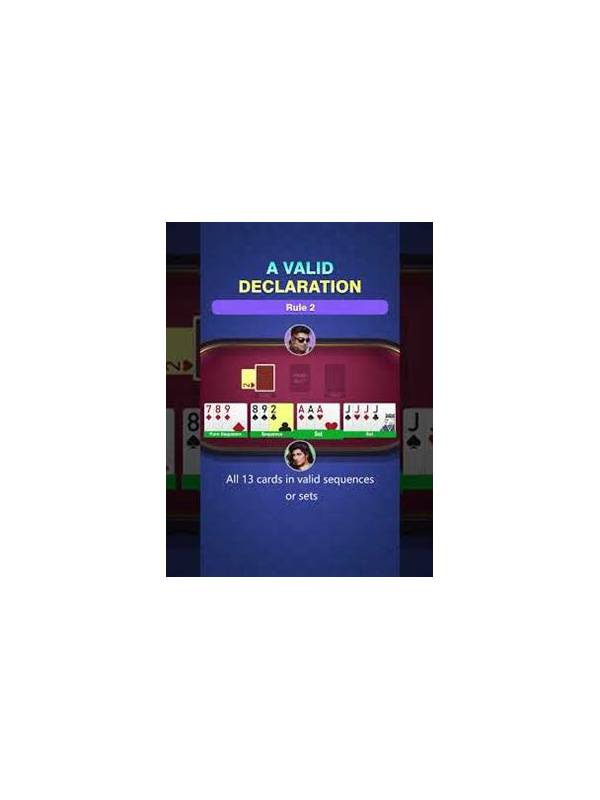
Rummy How-To: Make a Declaration Checklist
A short declaration checklist catches grouping and rule errors before you commit to the final [...]
Rummy Safety: How to Set a Session Budget You Can Respect
A clear spending limit and stopping rule can keep game costs within your plan. [...]