Rummy FAQ: What Is a Recovery Card?
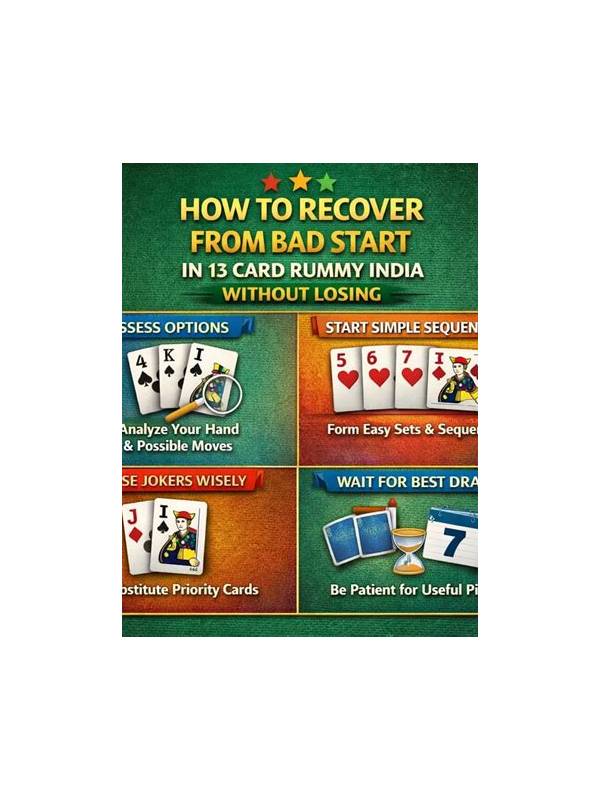
A recovery card is a card that gives your hand a useful second chance after an expected draw fails. It may connect two nearby ranks, complete a backup set, or release a stranded card by creating a new group. The important feature is not that it is always valuable. It is that it reduces the damage caused by an unsuccessful plan.
Players sometimes label every flexible card a recovery card. That is too broad. A card should have a practical job in the current hand. For example, a middle card may connect several ranks, but if those ranks are already blocked by other commitments, its theoretical flexibility does not help. A recovery card must fit at least one realistic alternative route.
To identify one, first write down your main route in plain language. Perhaps you are trying to complete a same-suit sequence and keep a pair as a backup. Then ask what you would do if the missing sequence card does not arrive. Which card could make the backup stronger? Which card could turn a loose card into a connector? Those candidates are recovery cards.
It helps to rank them by repair time. A card that repairs the hand immediately is strong, while one that requires two exact future cards is less reliable. Also consider discard exposure. If taking or keeping the recovery card gives opponents information, its value may be lower than its shape suggests.
Do not keep recovery cards forever. A backup has a carrying cost: it occupies space that could hold a completed group or a better route. Set a review point, such as the next two turns or the moment your main route becomes unlikely. If the card no longer repairs anything, reassess it like any other loose card.
The concept is most useful when reviewing uncertainty. Instead of asking only, “What card completes my plan?” ask, “What card keeps a failed plan from becoming a bad hand?” This shift encourages balanced decisions. You still pursue improvement, but you also protect the ability to recover. In practice, a hand with one clear route and one credible recovery route is often easier to manage than a hand chasing several attractive but fragile possibilities.
Recovery cards are also useful in teaching. Identify the preferred card and the recovery card separately. A learner then sees that planning is not only about finding the perfect draw; it is about maintaining a sensible action after an imperfect draw. That habit supports calmer reviews and reduces the temptation to label every missed card as a personal failure.
Related Post
Rummy Strategy: Choose an Anchor Card for a Messy Hand
Selecting one well-supported anchor card can give a messy rummy hand a stable starting point [...]
Rummy How-To: Mark Cards by Their Current Job
Assigning a temporary job to each card makes it easier to spot duplicates, gaps, and [...]