How to Test a Rummy Plan With One Discard
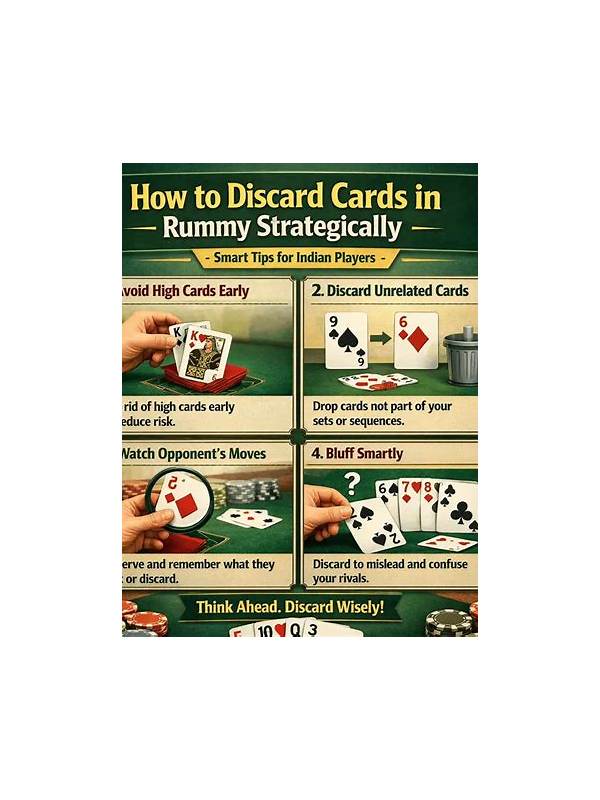
When a hand contains several possible combinations, players often rearrange cards without making progress. The one-discard test turns an idea into a concrete question: if this plan is correct, which card can I safely release right now?
Begin by selecting one proposed arrangement. Do not compare every possible layout at once. Place the cards that support the plan together, then identify the card left outside it. If the leftover card is an isolated high card, the plan may be reducing risk. If the leftover is part of a stronger existing combination, the plan may be costing too much.
Next, examine the missing pieces. Does the plan need one card that can be found in several ways, or one exact card from a narrow range? A plan that creates a clean discard and leaves multiple improvements is stronger than one that merely moves uncertainty from one group to another. The test is not a promise that the needed card will arrive; it is a way to measure the plan’s flexibility.
Check whether the arrangement preserves the required structure. In many rummy formats, a visually tidy hand can still fail because it lacks a required pure sequence or uses a joker where it is not permitted. Apply the actual rules before judging the plan. If it cannot lead to a valid declaration, discard the idea even if it lowers points temporarily.
Finally, compare the candidate discard with the weakest card in your current arrangement. Keep the plan that makes the better exchange, not simply the one with the most cards grouped together. A good plan usually lowers clutter, keeps at least one backup route, and does not expose an obvious useful card without reason.
Use the test after a major draw or when you feel stuck. One proposed layout, one candidate discard, one check of future flexibility: that sequence is short enough for live play and precise enough to prevent wishful rearranging. If no plan produces a reasonable discard, preserve the most flexible hand and wait for better information. You can make the test visible by arranging cards into the proposed groups before confirming a move. This is especially helpful for beginners because it separates a promising pattern from a complete one. The small pause also gives you a chance to verify whether a joker is being used in a permitted way and whether the final card count remains correct.
Related Post

Rummy Comparison: One Strong Route or Several Modest Routes
Choosing between a narrow high-potential plan and several modest plans depends on time, evidence, and [...]
Rummy How-To: Build a Small Error Log
A compact rummy error log turns repeated mistakes into specific questions for future practice. [...]