Rummy Comparison: High-Visibility Melds Versus Quiet Improvements
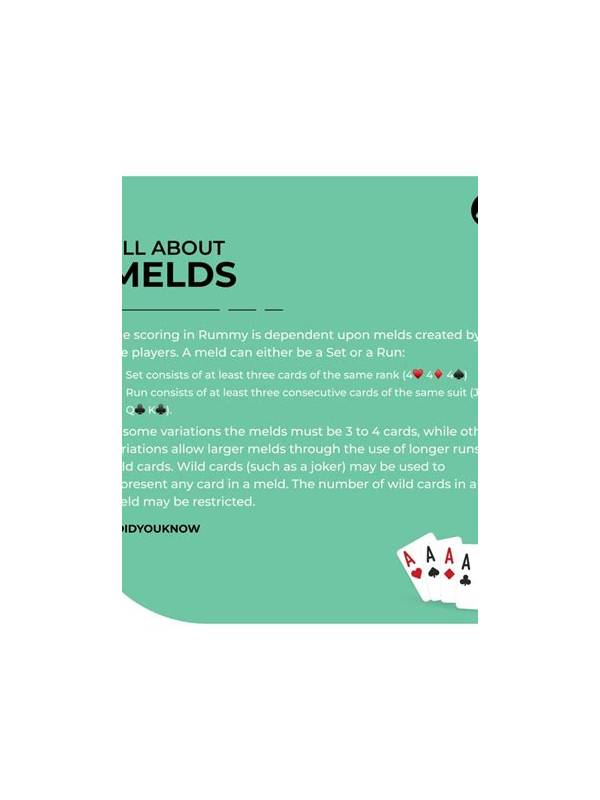
Some rummy improvements are easy to see. A new sequence appears, cards line up, and the hand looks cleaner. Other improvements are quiet: a high card leaves, a flexible connector is preserved, or two routes stop competing. Players can undervalue quiet progress because it does not produce an immediate visual reward. Comparing both kinds of improvement leads to steadier decisions.
An obvious meld has a real benefit. It reduces the number of loose cards and may create a valid part of a declaration. Check, however, whether the meld uses a card that was serving several purposes. A visible group can be expensive if it removes your only backup or makes the remaining hand dependent on one exact draw. Visibility is not the same as strength.
Quiet improvement usually changes the future. Discarding a costly isolated card reduces penalty and frees attention. Keeping a connector that works in two directions protects flexibility. Separating competing routes can also help because you stop spending turns trying to complete both. These decisions may look less dramatic, but they improve the quality of later choices.
Use three questions when comparing options. Which option reduces immediate risk? Which option leaves more acceptable draws? Which option can survive a miss? If the visible meld wins all three, take it. If it wins only the first while the quiet improvement wins the other two, the less exciting choice may be better. If the costs are close, use the discard pile and table timing as additional evidence.
Do not turn this comparison into a rule against completing melds. Rummy rewards valid structures, and delaying every clear combination can be just as harmful as chasing appearances. The point is to inspect what the meld changes. A strong meld simplifies the hand without destroying its remaining options.
After the hand, review both the action and the alternative. Note whether the visible choice improved the whole position or only one corner of it. With practice, you will become better at noticing quiet improvements before the endgame makes their value obvious.
This comparison is especially helpful for newer players because visual neatness can feel like certainty. A group that looks complete may still leave a difficult remainder, while an ungrouped hand may contain several low-cost choices. Inspect the remainder every time. The question is not whether the cards look tidy; it is whether the next decision becomes clearer and the hand remains capable of recovering from an ordinary miss.
Related Post
Rummy Guide: Use a Turn-by-Turn Planning Grid
A compact planning grid gives rummy players a way to compare hand progress without writing [...]
Rummy Safety: Keep Learning Notes Free of Sensitive Details
Privacy-conscious learning notes can support improvement without storing account, payment, or other players’ personal information. [...]