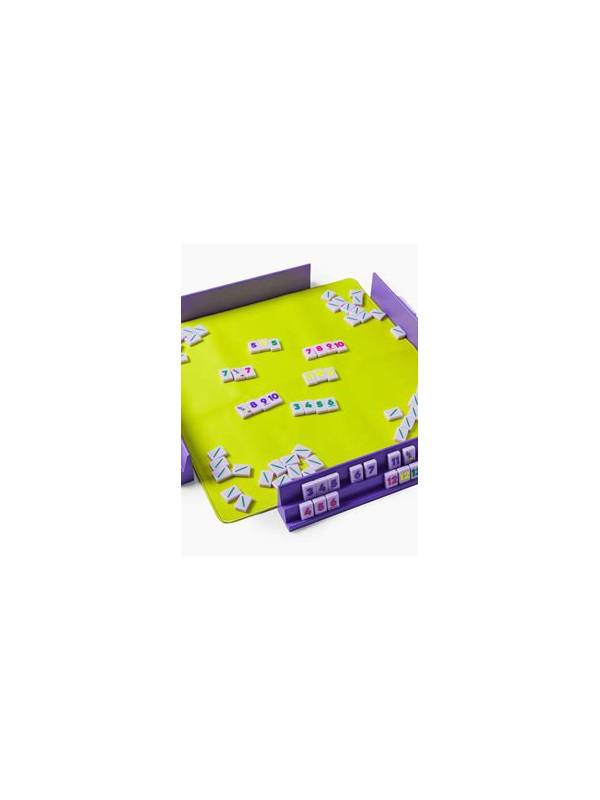
Rummy Tips: Use a Hand Boundary When Rearranging
Rearranging cards can reveal connections, but constant movement can also make a weak idea look convincing. A hand boundary is a simple mental line between cards you have verified and cards you are still testing. It preserves clarity while allowing exploration.
Begin by placing confirmed groups on one side of your view. A confirmed group is valid under the table rules and does not borrow a card from another group. On the other side, place pairs, connectors, jokers, and isolated cards whose roles are uncertain. If the interface sorts automatically, use labels or a short note instead of relying on physical position.
When you explore a new arrangement, move only the cards involved in that test. Ask what the arrangement proves: does it create a legal sequence, improve a set, or merely make adjacent cards look attractive? If the test fails, return the cards to the uncertain side. Do not leave a failed arrangement in place because it feels almost complete.
The boundary is especially helpful with shared cards. A card that could serve two routes should not be treated as confirmed in both. Mark its current job and keep the alternative visible as a possibility. Before discarding, compare the cost of releasing the card with the value of preserving each route.
Use the method near a declaration as a final audit. Check every group from the confirmed side, then inspect the uncertain side for duplicates, missing cards, or a joker counted twice. If any card crosses the boundary during the check, verify the whole affected group again. A neat screen is not proof of a valid hand.
This habit also improves practice reviews. After a hand, note which cards repeatedly crossed the boundary. They may be genuine flexible connectors, or they may be cards you habitually overvalue. The boundary does not make decisions for you. It prevents visual rearrangement from becoming false evidence, leaving you with a clearer distinction between what the hand contains and what you hope it can become.
Use the same boundary in a physical hand and on a screen. Consistency matters more than the exact position. Even a small note such as “confirmed / testing” can preserve the distinction when the interface automatically changes the card order. When another player’s action changes the available evidence, redraw the boundary mentally. A card that was only a possibility may become a stronger candidate, while a group that looked safe may need review. The boundary is meant to move with evidence, not become another rigid rule.
Related Post
Rummy FAQ: Should You Keep a Second Joker Unused
The best use of an extra joker depends on certainty, flexibility, and the combinations still [...]
Rummy FAQ: What Makes a Card a Useful Connector?
This FAQ explains how to judge connector cards by the jobs they can perform. [...]