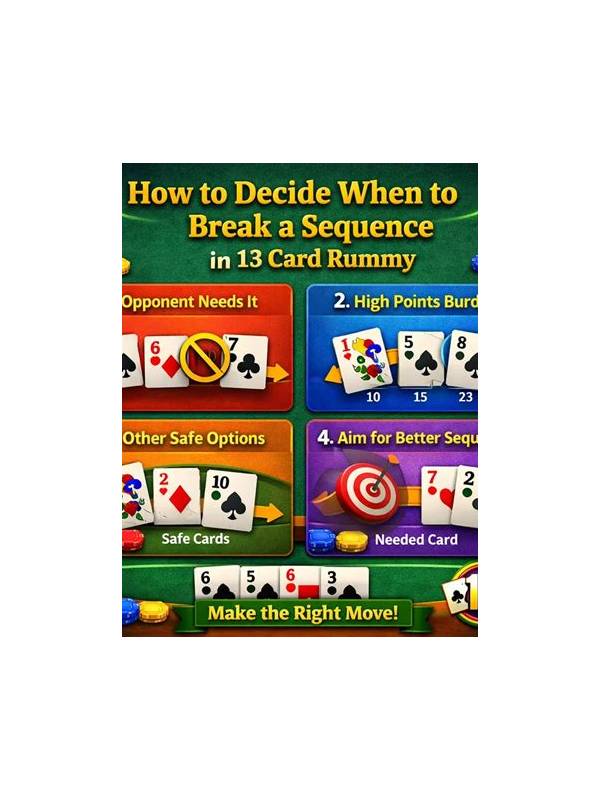
Five Endgame Signals That Should Change Your Rummy Plan
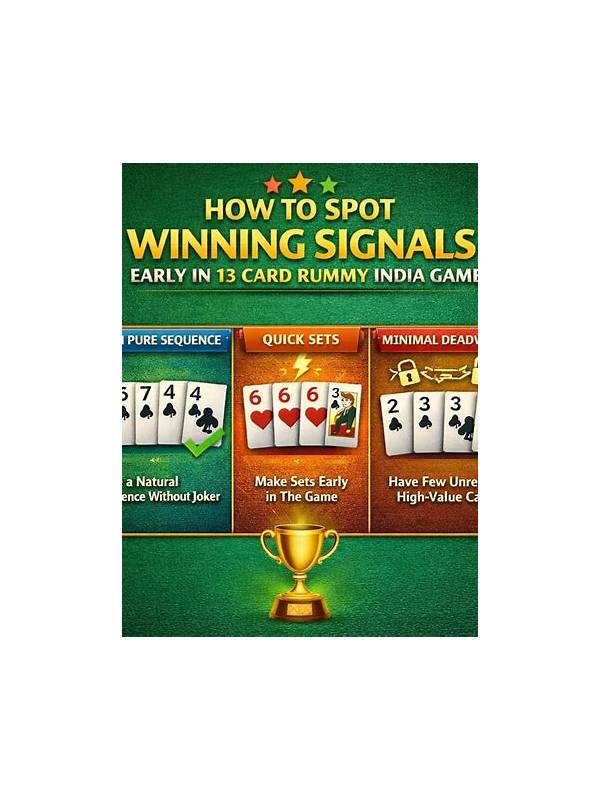
The endgame begins before anyone says they are close. A few visible signals can tell you that the hand has entered a higher-pressure phase. Recognizing them early helps you stop chasing attractive but unlikely improvements.
The first signal is a short discard pile with frequent pickups. When players take visible cards quickly, they may be working with specific connections. This does not prove that a declaration is imminent, but it means offering a useful link has a higher cost. Prefer a discard that is less connected to the public pattern.
The second signal is that your hand has only one ungrouped card. This can feel like success, yet the final card may be blocking a required pure sequence or may have no legal home. Check the entire arrangement before celebrating. A nearly complete invalid hand still needs a structural repair.
The third signal is a shrinking number of realistic outs. Count the cards that could improve your plan, not every card that looks related. If one exact rank remains useful, set a deadline. On the next turn, consider a broader arrangement or a low-cost discard instead of waiting indefinitely.
The fourth signal is a sudden change in the opponent’s discard value. Releasing low cards after holding them for several turns can indicate that the player has reduced their risk. Treat this as a reason to review your own pace, not as a reason to panic or copy their choice.
The fifth signal is score pressure. In a points format, a high-value leftover becomes more dangerous as the hand closes. In a pool or deals format, the best line may be the one that protects the match rather than maximizes a single hand. Match the endgame plan to the scoring system.
When two or more signals appear together, simplify. Protect any required sequence, reduce expensive isolated cards, and avoid a pickup that announces a narrow plan unless it completes a legal group. A calm, valid arrangement is often stronger than a clever finish that depends on one last miracle card.
Endgame signals should change your attention, not your character. You do not need to play defensively after every pickup, and you do not need to match an opponent’s speed. Use the signals to shorten review time around obvious dangers, then make the same legality and value checks you would make earlier. A measured response protects against both extremes: careless optimism and unnecessary panic when the table merely appears active.
Related Post
Rummy Comparison: Drawing From the Open Pile or Closed Pile
The open and closed piles offer different information and risk, so the better draw depends [...]
Rummy Discard Pile Observation Without Overreading Opponents
Read the discard pile for useful clues while avoiding assumptions about another player’s complete hand. [...]