Rummy Group Density: Find the Most Efficient Part of a Hand

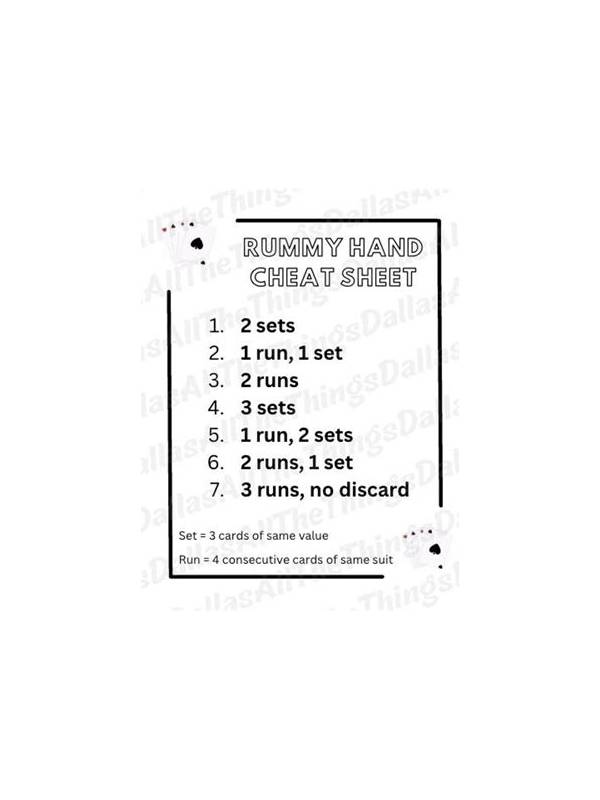
Group density is a practical way to compare competing rummy arrangements. It asks how many cards are already doing useful work inside a group and how many extra assumptions are needed to complete it. The idea is not a mathematical promise. It is a visual method for finding the part of a hand that deserves attention first.
Start with the cards that already form the clearest group under your variant’s rules. Count the cards that are firmly connected, then note the number of missing cards required for a valid result. A compact group with a clear completion route may be denser than a longer-looking arrangement that depends on several exact draws.
Next, compare overlapping plans. Suppose one card can support a sequence and a set. Give each plan its own temporary row rather than counting that card twice in your final hand. Look for the arrangement that gives the shared card the strongest job while leaving the fewest valuable cards stranded. This prevents a single flexible card from making two weak plans appear equally strong.
Density also applies to ungrouped cards. A set of three cards with two nearby ranks may have more connection than three isolated low cards, even if the isolated cards have lower penalty. Conversely, a high card with several plausible links may deserve more time than a low card that cannot join anything. Compare connections and repair cost together.
Repeat the count after a draw or discard. A new card can increase the density of one group while making another group redundant. The right response is not always to expand the densest group. Sometimes the new card lets you release a supporting card and simplify the whole hand. The objective is a valid, flexible structure, not the largest individual cluster.
Use density as a tie-breaker, not as a replacement for rules or safety checks. Before declaring, verify every group independently and make sure no card has been counted twice. During a real-money session, also follow applicable age, location, and spending restrictions. A neat group is never a reason to ignore the format or your limits.
The value of this method is that it changes the question from “which card looks promising?” to “which arrangement uses the evidence most efficiently?” That question is easier to revisit after the next turn and gives your practice review a concrete subject.
Make the comparison quickly, then act within the timer. The method is meant to sharpen attention, not create another source of hesitation.
Related Post
Rummy FAQ: When Should You Keep a Pair?
This FAQ explains how to judge a rummy pair by flexibility, timing, and the surrounding [...]
Rummy Strategy: Choose Between a Safe Finish and a Fast Finish
A late-round choice should reflect legal requirements, draw quality, points at risk, and the time [...]