Rummy Discard Timing: Why the Same Card Changes Value
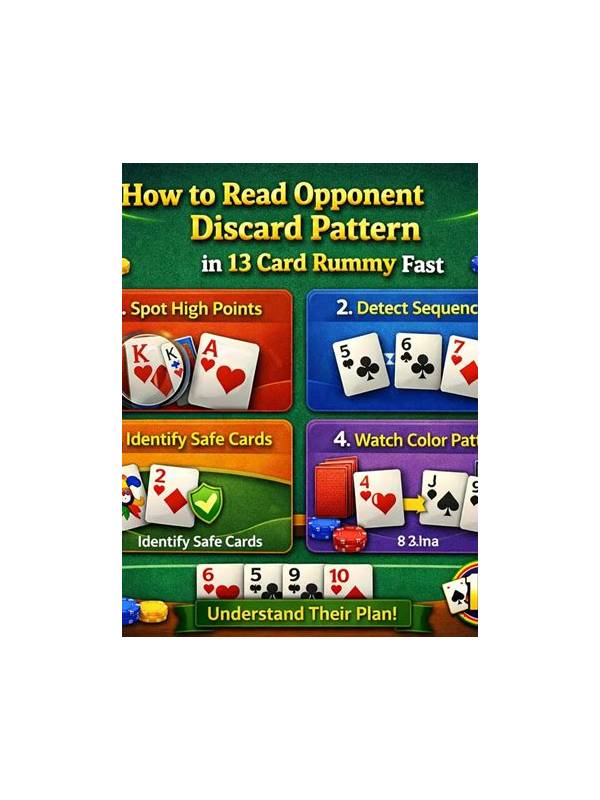
Card value changes as the hand develops, so discard decisions need regular review.
You can improve this skill by reviewing discarded cards after practice. Ask whether the card was flexible at the moment you released it, whether later information would have changed the choice, and whether the alternative discard carried a larger penalty. Do not mark every hindsight difference as an error. The purpose is to learn how timing changes value, not to pretend that the unseen future was known.
There is no permanently correct discard in rummy. A card that is harmless early can become useful later, while a card you protected for several turns may become a liability. Thinking about timing makes discards more deliberate.
Early in the hand, flexibility matters most. A middle card with several neighboring possibilities may be worth keeping even if it is not part of a group yet. An isolated high card has fewer safe futures and may be a better early release. At this stage, preserve routes rather than chasing a finished arrangement.
In the middle game, visible information changes the calculation. If the discard pile shows that several connectors for your middle card are gone, its flexibility is only theoretical. If opponents repeatedly ignore a rank that would help you, the card may remain available, but do not assume their choices reveal everything. Use the evidence as one factor, not a guarantee.
Late in the hand, reduce uncertainty. A card that requires two more favorable draws may no longer deserve space. Compare its penalty with the chance that it joins a legal group before someone declares. Keeping a low-value card can be sensible when it blocks a useful route, but a high-value orphan deserves urgent attention.
Your discard also affects opponents. Releasing a card that obviously completes a common sequence can help another player. Yet fear of helping someone should not make you keep an expensive card forever. Seek the lowest-regret release: a card with limited value to your own plan and limited evidence that it is dangerous to pass.
A useful timing question is: If I draw nothing helpful next turn, which card will I wish I had removed now? This focuses attention on downside rather than excitement. Re-evaluate after every draw, because the hand’s structure and the table’s information have changed.
Discard timing is the art of matching a card to the moment. Protect flexibility early, use evidence in the middle, and reduce risk late. The best discard is the one that keeps your future options healthy without ignoring the cost of delay.
Related Post
Rummy Safety: Protect Your Account on a Shared Device
Small privacy and login habits reduce avoidable account risks when a device has multiple users. [...]
Rummy FAQ: What Makes a Discard Safe Enough?
Safety is a practical estimate, so use several signals before releasing a card in rummy. [...]