Rummy Comparison: Conservative Melds Versus Exploratory Melds
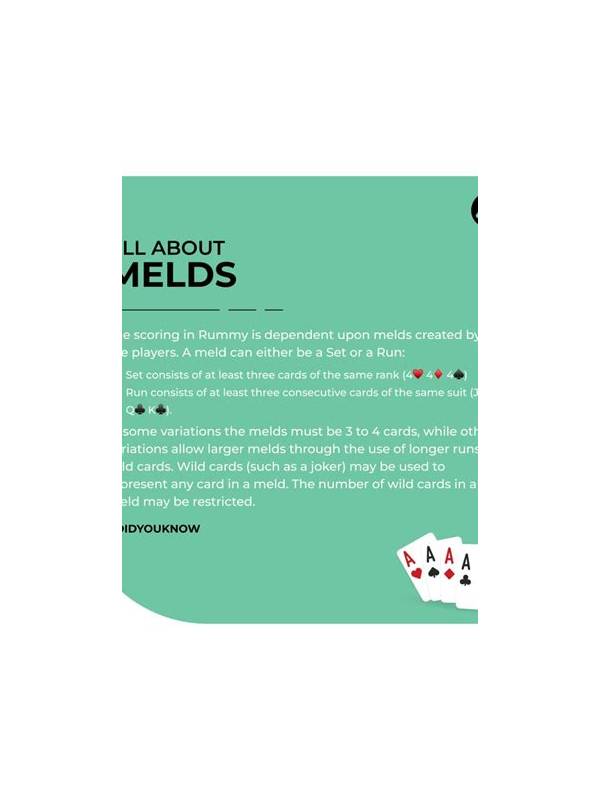
A conservative meld uses cards whose legal role is clear and whose completion reduces immediate uncertainty. An exploratory meld uses a less committed combination to test a route or preserve a broader plan. The distinction is about decision purpose, not whether one style is always correct.
A sound comparison ends with a defined fallback, not a promise to force the chosen style.
Conservative melds are useful when the hand is exposed to high points, the declaration requirements are strict, or a reliable group can simplify the remaining cards. They reduce clutter and make the next discard easier to evaluate. Their cost is opportunity: once cards are committed, some alternative arrangements may disappear.
Exploratory melds can be useful early, when several routes are plausible and the format rewards information. They may reveal which cards remain flexible or allow you to test how a hand looks after rearrangement. They are risky when they depend on a narrow improvement, consume a joker, or leave expensive cards without a release plan.
Compare the two styles with four questions. Is the meld legal now? What does it leave behind? How many realistic improvements remain? What is the cost if the next draw misses? A meld that looks active but leaves three unrelated cards may be less useful than a quiet group that creates a clean exit.
Timing matters. Early in a hand, exploration can have room to work. Late in a hand, the same route may be too narrow because there are fewer draws left. Public information and opponent actions can also move the balance toward caution.
Review meld choices by their stated purpose. If you chose exploration, did it create information or flexibility? If you chose conservatism, did it reduce exposure? This comparison builds judgment without pretending that a favorable result proves the decision was sound.
Consider the hand’s stage before choosing a style. A conservative meld may be best when only a few draws remain and the cost of a failed experiment is high. An exploratory meld may be reasonable when the hand is young, the route has several legal improvements, and the remaining cards are not expensive. In either case, keep a fallback. If the exploratory route fails, know which card will be released; if the conservative route leaves a gap, know what evidence would justify reopening the hand. This makes the choice reversible where possible and transparent during review. The useful question is not which style feels bolder, but which style matches the information and risk of the current turn.
Related Post
Rummy How-To: Set Up a Distraction-Free Practice Round
A short preparation routine makes rummy practice more focused and easier to evaluate. [...]
How to Organize a Rummy Hand for Faster Decisions
Arrange cards by role so that useful groups remain visible when the clock is moving. [...]