Rummy Guide: Compare Visible Information With Hidden Assumptions
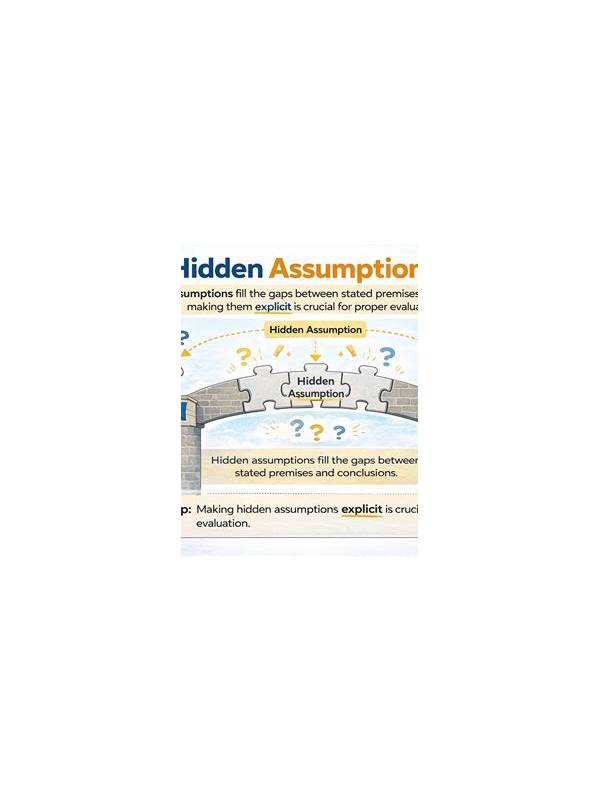
Rummy decisions often become confusing when visible facts and imagined explanations are mixed together. A discard is visible. The reason another player released it is usually hidden. Keeping those categories separate reduces overconfident reads.
Create two columns during practice. In the first, list facts: cards in your hand, cards in the discard pile, the current turn, the format, and any clearly displayed action. In the second, list interpretations: a player may be building a sequence, a missing card may be held elsewhere, or a discard may be a decoy. Interpretations can be useful, but they should not be treated as proof.
When a decision depends on an interpretation, identify the cost if it is wrong. If the cost is small, you may use the idea as one input. If the cost is discarding a confirmed group or committing to a very narrow route, demand stronger evidence. This does not require ignoring opponents; it requires matching confidence to consequences.
Review the discard pile in order rather than selecting one dramatic card. A single card can support several stories. A sequence of visible actions may provide more context, though it still does not reveal the complete hand. Ask which conclusion is supported by multiple facts and which conclusion depends on one assumption.
Do not allow private information from previous games to contaminate the current review. A player’s old habit may be a background hypothesis, not a current fact. Focus first on what is on the table now.
At the end of a hand, mark each important assumption as supported, unsupported, or unresolved. This simple label helps you learn whether your reads are improving. The aim is not to become certain about hidden cards. It is to make decisions that remain reasonable when uncertainty is real and unavoidable.
Rewrite an assumption as a question. “The opponent is collecting this suit” becomes “What visible evidence would make that more likely?” If you cannot name evidence, keep the idea at low confidence. During review, ask whether the same action would remain reasonable if the inference were wrong. Robust choices often preserve a legal group or manageable fallback, while fragile choices reveal a precise need for practice.
This habit also protects against dramatic single-card stories. One discard may be informative, but it rarely deserves complete control over your plan. Let patterns accumulate, and keep your own hand structure as the primary evidence for your own decisions.
Related Post
Rummy FAQ: When Should You Break an Almost-Complete Group?
Breaking a promising group can be correct when the alternative improves validity, flexibility, or immediate [...]
Rummy Guide: Build a Card-Need Matrix
Use a small matrix to compare what each incomplete group needs and where your hand [...]