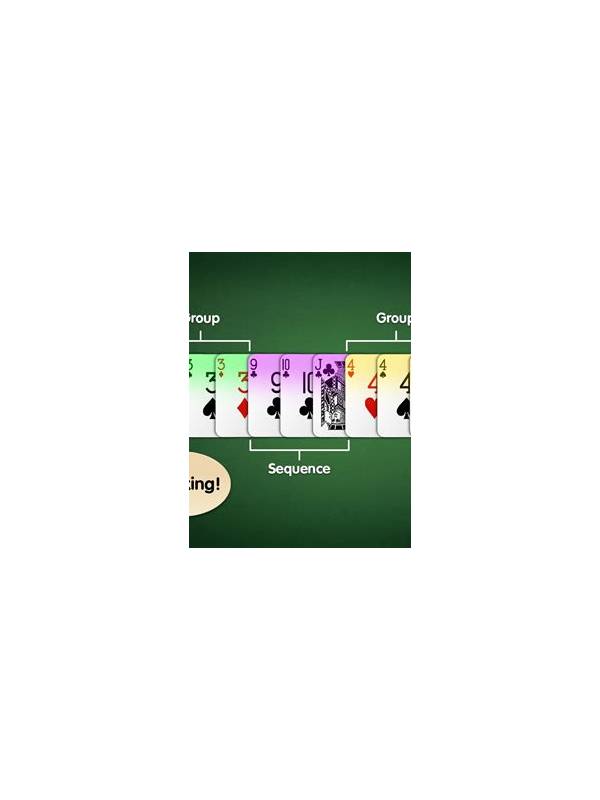
How to Review Your First Three Rummy Turns
The first three turns often provide enough information to organize a rummy hand without encouraging premature certainty. You have seen your starting cards, a few draws, and a small number of discards. Use that window to review structure rather than predicting exactly how the hand will finish.
On the first turn, identify your strongest natural arrangement and your most expensive unsupported card. Avoid forcing a declaration plan immediately. The opening goal is to discover which cards already cooperate and which card can leave without damaging those relationships. If you draw from the open pile, note why the card is useful; if you pass it, remember that choice as information about your priorities.
On the second turn, compare the new card with the original plan. Does it complete a pair, create a two-way connector, or merely look valuable by itself? Place it mentally into every plausible role before discarding. A card that fits two arrangements may be more important than a card that completes only one weak pair.
On the third turn, perform a reset. Count your secure groups, unfinished groups, and isolated cards. Check whether you are keeping a card because it still has a realistic purpose or because you are reluctant to admit that the idea failed. If a plan has not improved and another arrangement has gained support, change direction while the cost is small.
Do not overreact to three unhelpful draws. Randomness can produce a slow start, and no early review guarantees a winning hand. The point is to make your choices deliberate: protect required natural sequences, reduce dangerous deadwood, and maintain one backup route. If the game includes time pressure, make this review brief and repeat a shorter version later.
After the hand, compare your third-turn assessment with the final result. A good review is judged by the quality of the decision at the time, not solely by whether the next card happened to help. This habit builds adaptable thinking and keeps an opening plan from becoming a stubborn commitment.
Keep the review separate from predictions about other players. In the opening turns, there is usually too little evidence to identify another hand confidently. A clean assessment of your groups, deadwood, and available connectors is more useful than an elaborate theory. If you need a quick spoken reminder, use: protect the requirement, improve the structure, release the weakest supported card. That phrase can guide a turn without slowing the game down.
Related Post
Rummy How-To: Make a Backup Plan for a Broken Sequence
Keep a damaged sequence from controlling the hand by defining a practical backup before the [...]
Rummy Comparison: Focused Drills Versus Full-Round Repetition
Short sessions and long practice blocks develop different skills, so the better choice depends on [...]