Rummy Beginner Mistakes: Build a Personal Warning List
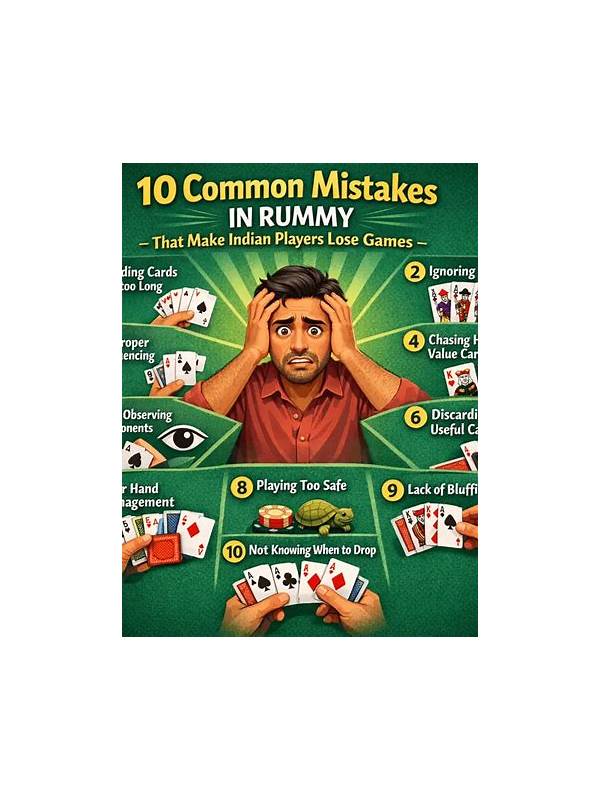
General strategy advice becomes more useful when it is turned into a personal warning list. Beginners often repeat a small number of mistakes, and recognizing the trigger is easier than memorizing dozens of rules.
Start by identifying three moments when your decisions become less reliable. Common examples include the first discard, a tempting joker pickup, and the turn after an opponent takes a useful-looking card. Write a short warning beside each moment. “Pause and count the pure sequence” is better than “play more carefully.”
Add a rule-check warning. Before joining a new format, confirm the number of cards, scoring method, declaration requirement, and timeout penalty. Familiar table names can hide meaningful differences. If you cannot explain the basic objective in your own words, choose practice mode or read the official help page first.
Create a card-management warning as well. Many new players hold a high card because it might connect later, even when it has no current partner. Ask whether the card has one strong use or several plausible uses. A high penalty combined with low flexibility is a reason to review the card, not an automatic command to discard it.
Include an emotional warning. Signs may include opening another table immediately after a loss, increasing a stake, arguing in chat, or playing while distracted. Choose the action in advance: pause, mute chat, close the app, or switch to free practice. The warning is successful when it changes behavior before the mistake grows.
Keep the list visible but short. Five items are easier to use than twenty. Review it before a session and after several hands. Remove warnings that no longer apply and add one only when a pattern appears repeatedly. This turns the list into a living checklist rather than a source of anxiety.
Do not judge yourself by the outcome alone. A hand can be lost despite following the checklist, and a hand can be won despite ignoring it. Measure whether you noticed the trigger, made the rule check, and respected your limit.
A personal warning list supports learning because it connects advice to observable behavior. Use plain language, keep each item actionable, and stop when attention is no longer available. The goal is steady decision-making, not perfection in every deal.
Related Post
Rummy Comparison: Keep a Plan or Keep a Card?
Comparing a complete hand plan with the value of one attractive card helps prevent attachment [...]
Rummy Guide: Plan Around a Known Joker
A joker is most useful when it solves a defined structural problem without hiding a [...]