Rummy Card Value: Balance Points and Flexibility
Think of value as a balance rather than a single ranking. A card that supports two plans may be worth keeping briefly, even if its printed value is high. A cheap isolated card may still be replaceable when it blocks a better arrangement. If two choices remain close, choose the one you can explain clearly and reassess next turn. There is no need to search for a perfect discard when evidence is limited; a repeatable method is more useful than a complicated theory that creates hesitation.
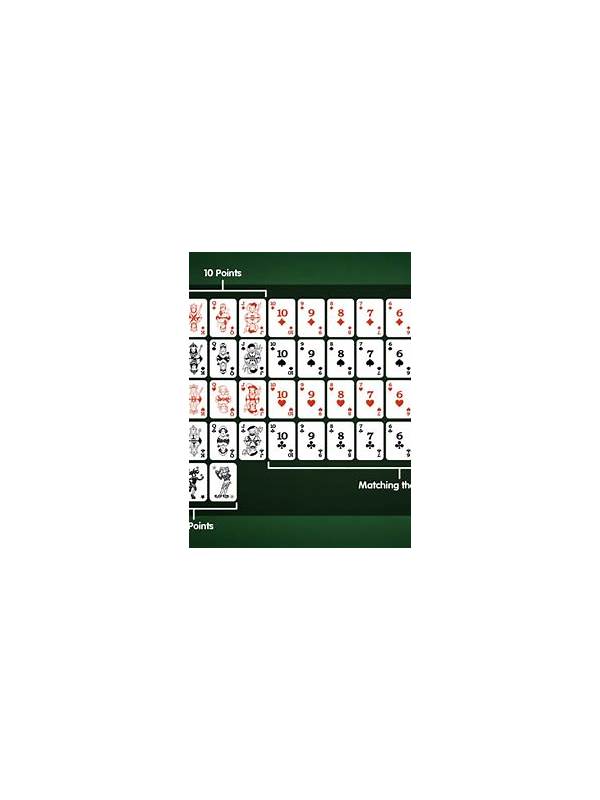
Card value in rummy has two meanings. The first is the score attached to a card if it remains ungrouped. The second is its practical value while you are building a hand. A high card may carry a larger penalty but also connect naturally to neighboring ranks. A low card may be cheap to hold yet completely isolated. Good decisions consider both dimensions.
Start with the scoring risk. Check the rules for the table because card values and limits can vary by format. In many common games, face cards and aces deserve attention when they are not part of a group. Removing a disconnected high card can reduce possible loss, but discarding it automatically may be wasteful if it is one step from a useful sequence.
Now measure flexibility. A card has more flexibility when several unseen cards could improve it or when it can join more than one developing group. Two adjacent cards of the same suit often offer a clearer route than a lone high card. A duplicate rank across suits may also have set potential. Write down these connections mentally instead of relying only on the printed number.
When choosing between two discards, compare three questions. Which card has the least realistic path to a valid group? Which discard reduces the most scoring exposure? Which choice reveals the least useful information to another player? The third question should remain modest: opponents cannot be read with certainty from one visible card, so use it only as context.
A practical method is to rank cards as complete, promising, or replaceable. Complete groups should normally stay. Promising cards need a clear reason to remain, such as a nearby connector or a useful set possibility. Replaceable cards are isolated, expensive, or competing with stronger plans. This ranking can change after every draw, and that is normal.
Card value is therefore not a fixed label. It changes with the rest of the hand, the format, and the stage of the round. A short review before each discard keeps points and flexibility in the same conversation. The result is a measured choice based on structure rather than the reflex to throw away the largest number.
Related Post

Rummy Endgame Choice: Simplify or Preserve Flexibility
Decide when a nearly finished rummy hand benefits more from simplicity than from another ambitious [...]
Rummy How-To: Use a Simple Hand Strength Scale
A five-level hand scale helps players make consistent choices as a rummy round changes. [...]