Rummy Comparison: Counting Outs Versus Counting Penalty
The two counts can disagree without creating a contradiction. A move may increase your outs while also exposing an expensive leftover. In that case, identify whether the added progress is worth the new risk under your format and limits. If you cannot explain the tradeoff, choose the clearer arrangement and review the position later. Good evaluation accepts uncertainty instead of disguising it as a precise forecast.
When tempted by a dramatic draw, write the attractive possibility in one column and the consequence of missing it in the other. Ask whether a smaller improvement leaves a better fallback. This slows impulsive choices without complicated mathematics and gives you useful language for reviewing a round: good outs with unacceptable penalty, or modest progress with a strong safety margin.
Counting outs asks, “Which draws would improve this plan?” Counting penalty asks, “What happens if I am forced to show these loose cards?” The first view emphasizes progress; the second protects you from costly failure. Strong decisions use both.
Outs are useful early in a hand. A plan with several realistic helpful draws may deserve attention even if it is not complete yet. Count exact requirements and note whether the needed cards remain available. Broad improvements are generally more attractive than a single perfect draw, but do not assume every theoretical card is still live.
Penalty becomes more important as the hand approaches a declaration. A high-value isolated card can turn a small delay into a large loss. If two plans have similar improvement potential, choose the one that leaves cheaper, more flexible leftovers. This is especially important when the table is moving quickly or another player appears close to finishing.
Neither measure should be used alone. A plan with many outs may still be poor if it requires breaking a valid group or holding expensive cards. A low-penalty hand may be safe but unable to form the required structure. Compare the distance to a legal declaration, the quality of available draws, and the cost of being interrupted.
Try a two-line note during practice: “progress: three helpful ranks” and “risk: one high loose card.” Update it after each turn. The note does not need exact probabilities. Its purpose is to stop one attractive feature from hiding a serious weakness.
The balance also depends on format and table rules. Confirm scoring before assigning importance to points. In a practice game, you can emphasize learning and observation; in a competitive game, follow the permitted limits and your personal budget. The best hand is not always the one that looks closest at this moment. It is the one whose progress and downside you can explain clearly.
Related Post
Rummy Wallet Boundaries: A Practical Budgeting Checklist
Set clear spending boundaries before play so entertainment decisions remain separate from game results. [...]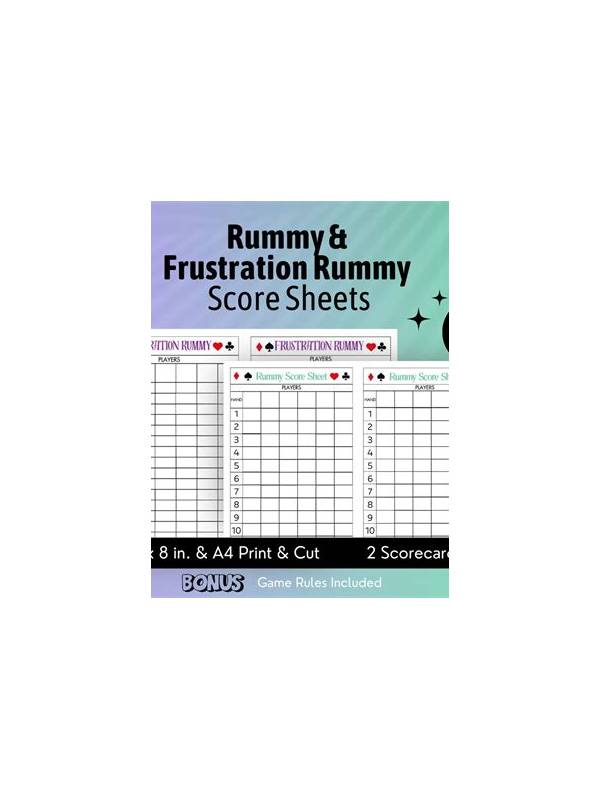
How to Keep a Rummy Score Sheet That You Can Trust
A consistent score sheet reduces disputes and makes each rummy round easier to review. [...]