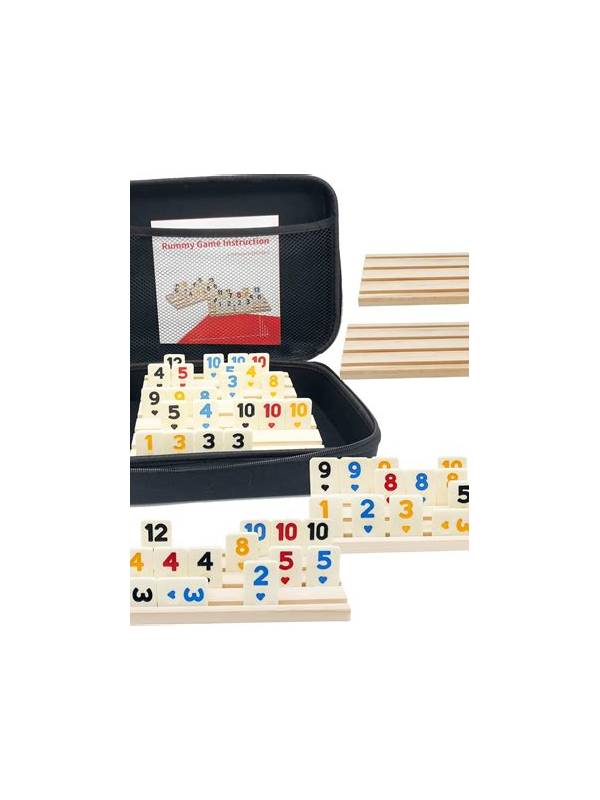
Rummy Comparison: Holding a Pair Versus Holding a Lone Connector
A pair and a lone connector can both look promising, but they create different kinds of flexibility. A pair may become a set if another card of the same rank appears. A connector may join a sequence, sometimes in more than one direction. Choosing between them requires more than counting immediate matches; you must also consider how each choice affects the rest of the hand.
Start with the rules and the surrounding cards. A pair supported by another card of the same rank can be valuable, but if the remaining hand already depends on sets, it may create a crowded plan. A lone connector is stronger when it sits near cards of the same suit or when it can join two plausible runs. Without surrounding support, it may simply be an isolated high-cost card.
Compare the number of useful draws, then compare the consequences of missing. If the pair misses, can you discard one copy without damaging another group? If the connector misses, will it remain expensive or block a flexible card? A card’s fallback value matters. The better hold is often the one that leaves a cleaner hand after an ordinary draw.
Table information can shift the choice. If several cards of the pair’s rank have already appeared, its set route may be narrow. If nearby suited cards have been discarded, the connector route may also be weaker. Treat visible information as a reason to adjust, not as proof that a route is impossible.
Use a time limit for both options. Hold the pair or connector while it has a defined improvement path, then reassess after the next meaningful draw. This avoids treating either pattern as automatically valuable. A pair is not always better because it looks complete, and a connector is not always better because it has two directions. Context decides which one deserves the space.
There is no need to defend the original choice after new evidence arrives. If the pair loses support, release it. If the connector gains a clear neighbor, promote it. The comparison should be repeated as the hand develops, but not every turn needs a full analysis. A short question is often enough: which hold gives me the cleaner next decision? Choosing the card that preserves clarity can be better than choosing the pattern that looks most impressive in isolation. This keeps the decision tied to the hand you have now. This comparison is about current utility, not a fixed rule about pairs or connectors. Revisit it after each important draw and let the hand’s evidence decide. A flexible player can release a familiar pattern when another route becomes cleaner.
Related Post
Rummy Guide: Compare Two Hands by Flexibility
Learn a practical way to compare rummy hands by the number and quality of future [...]
Rummy Strategy: Compare Cards by Replacement Cost
Replacement cost helps players choose between loose cards by measuring how difficult each one would [...]