Rummy Comparison: Natural Sequences and Joker-Assisted Sequences
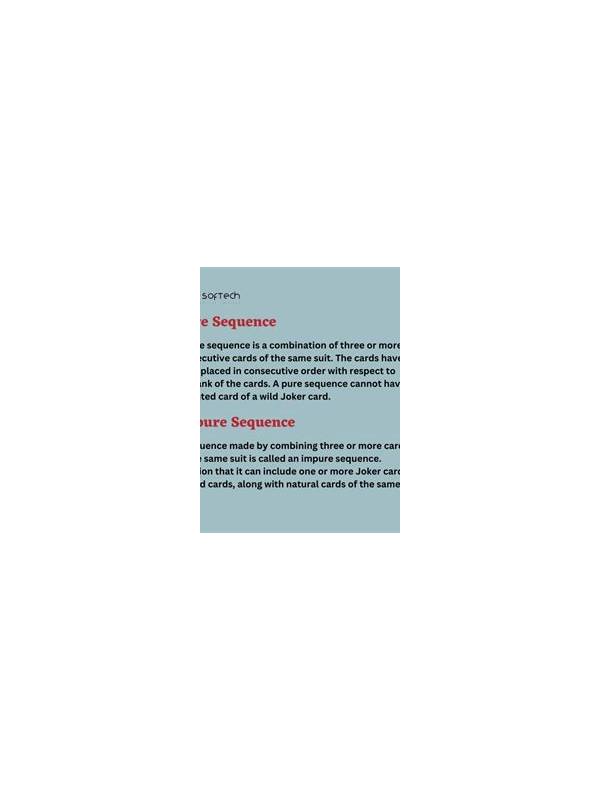
Natural sequences and joker-assisted sequences can both be valuable, but they provide different kinds of security. A natural sequence uses consecutive cards of the same suit without substitution. A joker-assisted sequence replaces a missing card and may complete a route sooner, but it also requires careful planning.
The main advantage of a natural sequence is certainty. Once the required cards are present, the group is stable and supports a valid declaration under common Indian rummy rules. It also preserves the joker for another route. This stability can simplify the rest of the hand because one important requirement is no longer dependent on a substitute.
A joker-assisted sequence offers flexibility. It can connect cards that would otherwise remain separate and may reduce the number of precise draws needed. It can be especially useful when a hand contains a strong pair of natural connectors but lacks one middle rank. The joker creates a route where none was previously complete.
The trade-off appears when the joker is used too early. A joker may complete a weak route while a natural arrangement could have used it more effectively elsewhere. Before committing, compare the alternatives. Does the joker finish a group that is otherwise difficult to build? Does moving it create a natural sequence or reduce point exposure? Which arrangement leaves more recovery options?
Do not treat a joker as permission to keep every related card. Once a joker-assisted sequence is established, extra cards still need their own jobs. Release duplicates or isolated cards that no longer contribute. Likewise, do not break a sound natural sequence merely to create several speculative joker routes.
In the endgame, prioritize the rule requirement and the route closest to valid completion. A natural sequence generally deserves protection, while a joker-assisted route should be checked for correct use and surrounding structure. The comparison is not about declaring one type universally superior. It is about assigning the joker where it reduces the most uncertainty.
Practice by taking sample hands and writing two arrangements: one that maximizes natural groups and one that uses the joker for flexibility. Count the remaining loose cards and missing pieces in each. This exercise trains you to see the joker as a resource with an opportunity cost, rather than as a free solution to every difficult hand.
Related Post

Rummy Guide: Use Card Groups Without Losing the Whole Hand
Grouping cards helps planning, but temporary groups should remain open to revision. [...]
Rummy Tips: Use a Two-Column Discard Journal
A simple two-column note can reveal whether your rummy discards are planned or merely reactive. [...]