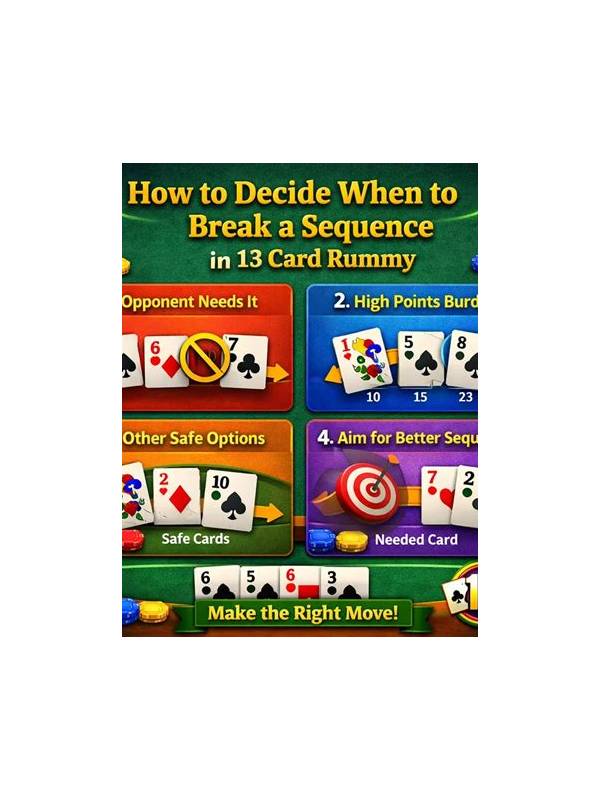
Rummy Comparison: Repairable Cards Versus Replaceable Cards

Two cards can look equally weak while creating very different decisions. One may be repairable because several unseen cards would improve it. Another may be replaceable because it has no useful connection and can leave without changing the rest of the hand. Comparing those categories is more useful than ranking cards by face value alone.
A repairable card has a realistic path to a group. A middle card beside a same-suit neighbor may accept cards on either side. A card that matches two cards of another rank may also be close to a set. Its value comes from the number and quality of possible repairs. However, a repairable card can become expensive if every repair is narrow or if another card has already claimed the same route.
A replaceable card is one whose removal creates little disruption. It might be an isolated high card, a duplicate that serves no current purpose, or a card whose only connection depends on a low-probability draw. Replaceable does not mean useless in every situation. It means the hand has a reasonable way to continue without it.
To compare two candidates, ask four things. How many legal improvements does each card have? How many of those improvements are still plausible? If the card leaves, how many other groups need to be rearranged? Finally, what point or exposure risk is attached to keeping it? A low card with one exact repair may be less attractive than a medium card with three broad repairs.
The comparison also changes as the hand develops. Early in a round, flexibility deserves more weight because there is time to learn. Later, a nearly finished group can outrank a flexible loose card because completion is now more important. A player should therefore avoid writing a permanent value beside any card.
A useful practice is to describe each candidate in one sentence: “This card is repairable through these routes,” or “This card is replaceable because nothing else depends on it.” If the sentence is vague, the card may be receiving value from hope rather than evidence. Clear language makes the next discard more deliberate and makes post-game review more productive. A practical extension is to test the comparison against a discard-pile choice. Taking a visible card may make one route repairable, but it can announce an intention and reduce future choices. Before taking it, identify the replacement cost of the card you would release. If releasing it breaks a broad route while taking the new card creates only one narrow route, the apparent improvement may be misleading. This extra check keeps “available now” separate from “valuable overall.” The distinction is not permanent. A card can be repairable early and replaceable later after its useful neighbors disappear. Reassess the category as visible information changes rather than relying on the label from the opening hand.
Related Post

Rummy FAQ: When Does the Discard Pile Tell You Enough?
The discard pile offers clues, but a few cards rarely justify certainty about another player’s [...]
Best-Roulette-Italiano-Sites-in-India-Top-Online-Casinos-for-Gamblers
Title: Best Roulette Italiano Sites in India: Top Online Casinos for Gamblers Online gambling in [...]