Rummy Decision Trees for Tricky Opening Hands
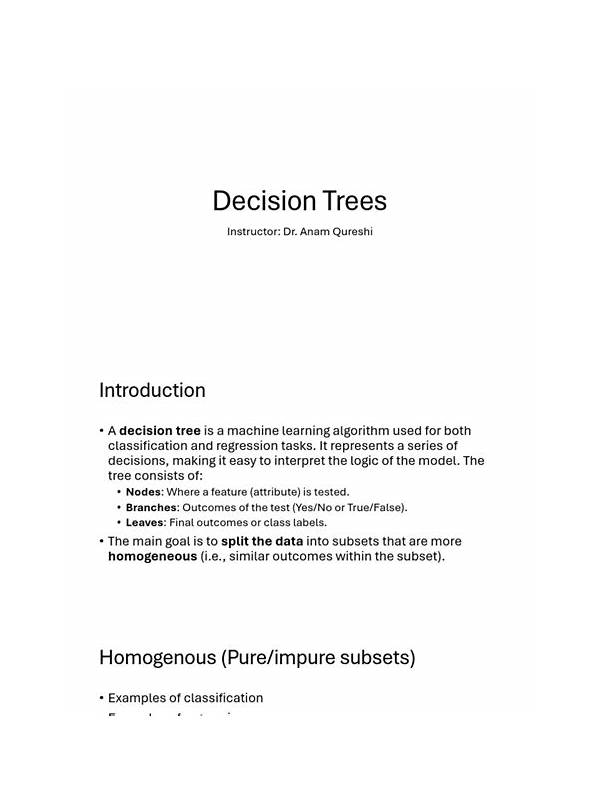
An opening hand in Indian rummy rarely announces its best arrangement immediately. You may see a pair, a promising middle card, and several isolated cards that could connect in different ways. Instead of committing to the first attractive combination, use a simple decision tree. It keeps attention on evidence and prevents one exciting possibility from controlling the whole hand.
Start by asking whether you already have a pure sequence. If the answer is yes, protect it while examining the remaining cards. A completed pure sequence gives the hand a foundation, but it does not mean every other card should be forced into a set. If the answer is no, give the search for a pure sequence first priority. Look for same-suit cards with a one-step gap, adjacent ranks, or a small run that might grow naturally.
The next branch concerns flexibility. For each ungrouped card, count its realistic connections. A six of hearts might connect to five or seven of hearts, while a high, isolated card may have fewer useful routes. Do not treat every theoretical connection as equally likely. A card that needs two precise draws is less flexible than one that already sits beside a useful card.
Then inspect pairs and possible sets. A pair can become a set, but it can also block a sequence plan if both cards are being held only because they look alike. Ask which arrangement uses fewer future assumptions. If a pair has one strong suit connection and one weak one, keep the card that supports the stronger structure unless another card has a clearer role.
Finally, identify a discard candidate. Prefer a card that is high in points, isolated, and unlikely to help two different plans. Before discarding, check whether it could complete a pure sequence with a card already held. A short pause here often prevents the most expensive opening mistake.
This tree is not a prediction machine. It is a repeatable way to sort priorities: secure a pure sequence, preserve flexible links, test pairs honestly, and release the weakest assumption. With practice, the same questions become quick enough for live play and calm enough for a practice table.
If two branches remain close, choose the one that is easiest to verify on the next turn. Clear reasoning is often more valuable than a clever arrangement that depends on several unlikely cards.
Related Post
Rummy FAQ: When Should You Replace a Hand Note?
Replace a hand note when new information changes its decision value, not merely because the [...]
Rummy Comparison: Early Information and Late Information
Comparing early and late clues helps players use table information without overreacting. [...]