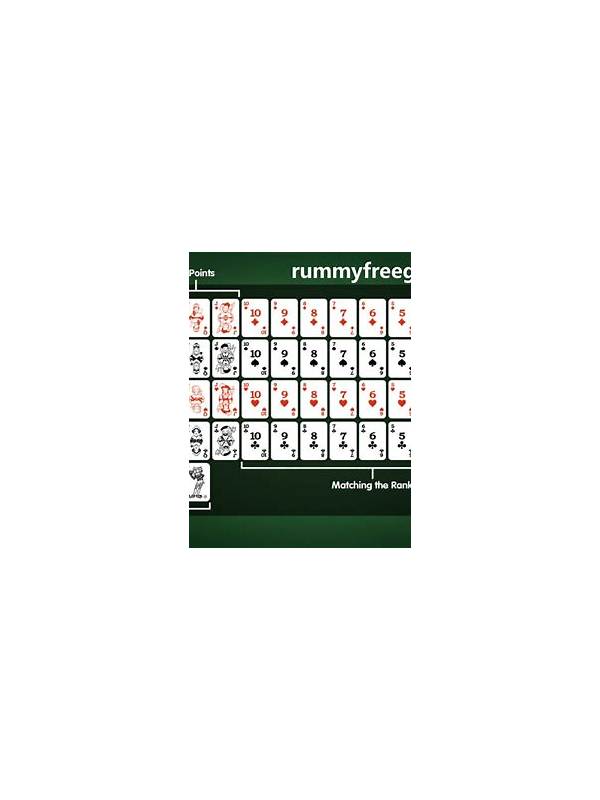
Rummy FAQ: Why Does a Duplicate Rank Need Context?
Two cards with the same rank look naturally connected, but a duplicate rank does not tell you how the cards should be used. They may become part of a set, support different sequences, or compete for the same limited role. Context determines whether the pair is an asset or a blockage.
First inspect the suits. If each card has useful neighbors, the pair may be flexible because either card can move toward a sequence while the other remains available for a set. If neither card connects to nearby cards, the pair may be relying entirely on a future matching rank. That is a narrower plan than its neat appearance suggests.
Next check the rules. Some Indian rummy formats require a pure sequence, and a pair that looks attractive cannot replace that requirement. A joker may also change the value of one member of the pair by making an impure group easier, while leaving the other card free for a different route. Scoring rules can make a high-rank duplicate costly to retain.
Consider overlap as well. If both cards are being saved for the same group and only one can ultimately be used there, the second card is a candidate for reassessment. If each has a separate credible job, the pair is not necessarily redundant. Write down those jobs in plain language; vague usefulness often disappears when stated precisely.
Finally, watch what the table reveals. An open-pile discard that completes one suit route may make the pair less important. A visible card that reduces the chance of a set should lower confidence, not create panic. Information changes the estimate; it does not create certainty.
When reviewing a duplicate rank, ask: “What can each card do independently?” If the answer is clear for both, keep the pair with a defined review point. If one answer is only “maybe the matching rank arrives,” compare it honestly with your weakest singleton. Context turns a visually obvious pair into a reasoned decision.
The same principle applies to duplicate ranks that arrive later. Do not assume the second copy confirms the first plan. Re-sort the hand, identify independent roles, and decide whether the new card improves structure or simply increases overlap. A pair is information about possible grouping, not a command to hold both cards indefinitely.
Related Post
Rummy Table Focus: Remove Distractions Before Playing
A distraction check can improve attention and help keep an online rummy session within its [...]
Rummy Strategy: Use a Three-Window Card Scan
A three-window scan helps organize a rummy hand before a draw creates new choices. [...]