Rummy FAQ: How Should You Treat a Promising Pair?
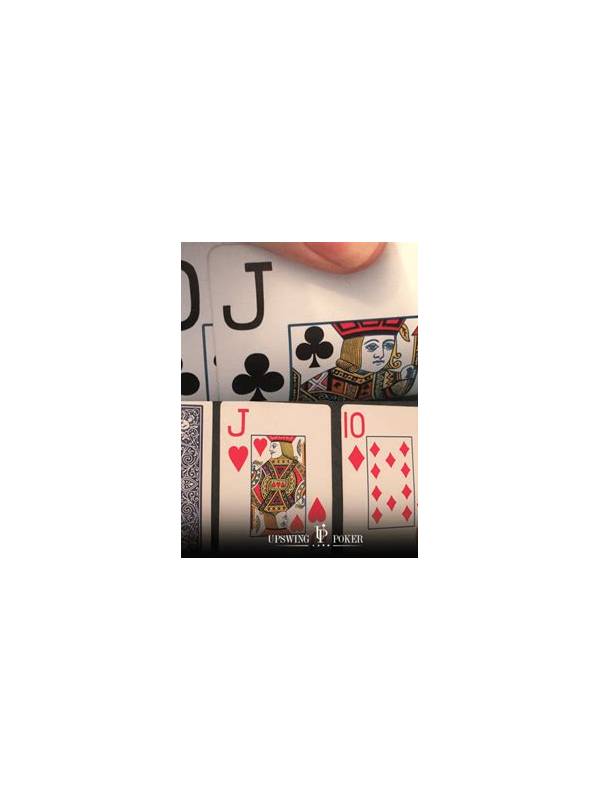
A promising pair can become a set or support a sequence, but it is not a completed group. Treating it as finished too early can make the rest of the hand seem stronger than it is. The right question is what useful routes the pair actually offers.
First identify the pair’s role. Two cards of the same rank may support a set if another suit becomes available. If the ranks are adjacent in one suit, they may support a sequence. A pair can sometimes support both ideas, but the same cards cannot be counted in both groups at once. Write down the alternatives separately before choosing one.
Check the number of improving cards. A pair that can improve through several suits or neighboring ranks has more flexibility than one that needs a single exact card. Consider whether the needed cards are already visible in the discard pile or whether the variant’s deck makes them plausible. Avoid pretending to know what opponents hold; use visible information as a guide, not proof.
Then check point exposure. A pair of high cards may be worth keeping briefly if it has strong routes, but it can become an expensive waiting room. A low-point pair may be safer to retain, yet safety does not create progress. Compare the pair with the weakest ungrouped card and with the quality of your next discard.
Set a review point. After one or two draws, ask whether the pair gained support, lost an alternative, or is blocking a better plan. If nothing changed, decide whether the pair still serves a required structure. This prevents a familiar-looking pair from surviving only because it was in the opening hand.
Pairs are useful building blocks, not promises. Evaluate their legal routes, flexibility, and cost in the current table. That view keeps the hand honest while still giving good combinations enough time to develop. That view keeps the hand honest while still giving good combinations enough time to develop.
If a pair supports two plans, decide which plan has priority before the next draw. Otherwise the pair may appear to make progress in both directions while actually completing neither. You can keep the alternative in mind, but assign the cards provisionally and identify the weakest outside card. This makes the next discard more deliberate. Once one route receives support, update the assignment and stop counting the pair as evidence for the abandoned route.
Related Post

Rummy How-To: Build a Decision Tree for a Loose Card
A small decision tree turns one loose-card question into a sequence of practical checks. [...]
Rummy Guide: Recheck the Declaration in a Fixed Order
A fixed declaration review reduces missed requirements when a promising rummy hand is ready to [...]