Rummy FAQ: What Is a Provisional Discard?
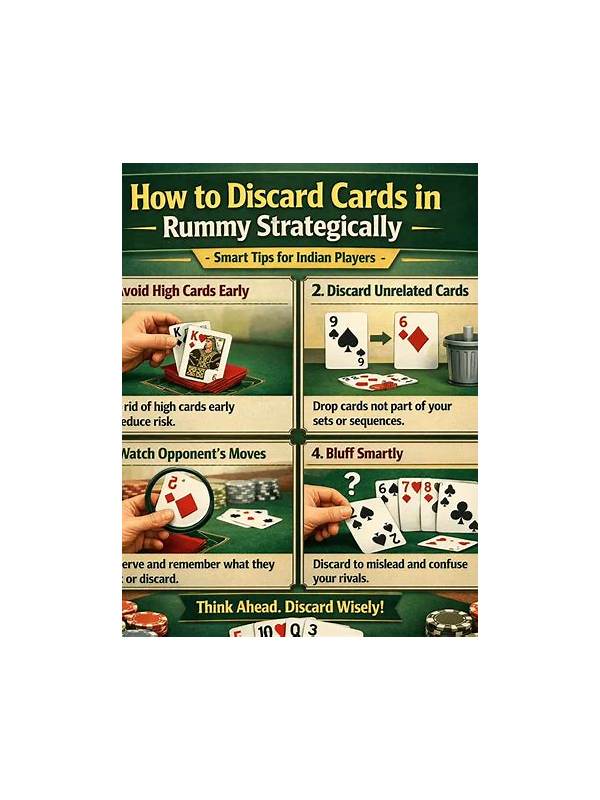
A provisional discard is a practical way to handle uncertainty. It does not mean the card is universally bad. It means that, given the current hand, the card is the least useful choice for now and can be reconsidered if new information changes the structure.
This idea is helpful when two cards have similar value. Instead of searching for a perfect answer, identify the card with the weaker present role and release it while recording why. Your reason might be that it belongs to only one narrow route, duplicates a stronger card, or carries points without supporting a confirmed group.
The word provisional should not become an excuse to reverse every choice. Set a review condition before acting. A condition could be a new card that changes the route, a visible discard that removes a possibility, or a fixed number of turns. If none of those conditions occurs, the original discard remains a reasonable decision.
A provisional discard also needs a boundary. Do not retrieve a card mentally just because the next draw would have used it. Hindsight can make every released card look valuable. Review the information that was available at the moment, then ask whether the choice followed your stated rule.
This method is especially useful in practice games. Write the card, its current role, the route it might support, and the point at which you would reassess. After the hand, compare the note with the actual sequence. You may discover that your “backup” card was not as flexible as it seemed, or that your review condition was too late.
In short, a provisional discard is a disciplined temporary judgment. It acknowledges uncertainty while still requiring action. Used carefully, it reduces paralysis, limits emotional attachment to attractive cards, and gives later review a concrete starting point. It does not improve every outcome, but it can improve the consistency of the decisions that lead to those outcomes.
For example, a pair may be kept because it has two credible connectors, with a review after two turns. If neither appears and a high-value singleton remains exposed, the review may support releasing the pair. If one appears, check the full hand rather than accepting it automatically. This method is also useful with a practice partner: compare reasons and review points instead of arguing about who was right.
The same language works for a card released early. You can describe its present role, the route it abandoned, and the information that would justify a different choice later. This makes a provisional decision traceable without claiming that the card was permanently worthless.
Related Post
Rummy Guide: Estimate Congestion Around a Needed Rank
Judge whether a missing rank is a realistic target by examining how many routes compete [...]
Rummy Comparison: Drawing From the Open Pile or Closed Pile
The open and closed piles offer different information and risk, so the better draw depends [...]