Rummy Guide: Use a Card Census Before Choosing a Route
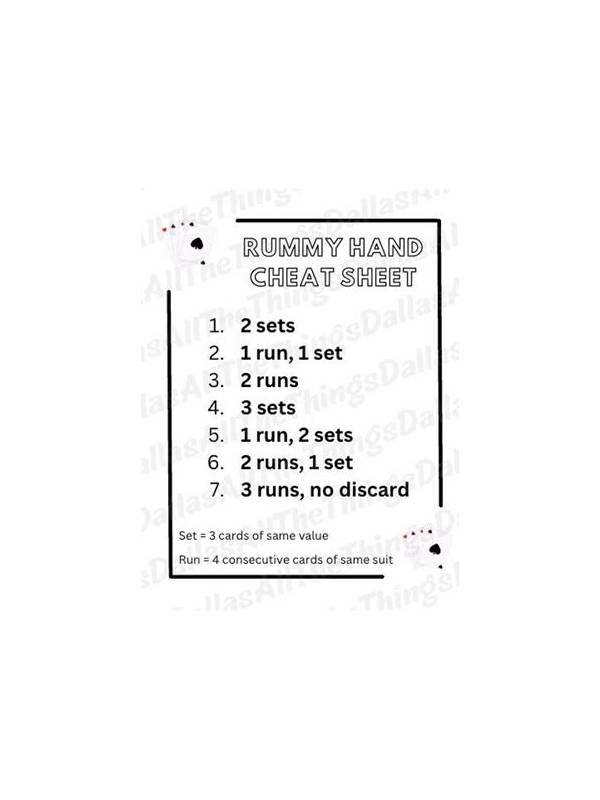
A rummy hand can look busy without containing many useful possibilities. Before choosing a route, take a card census: a compact description of what is present, what is missing, and what is merely attractive. This prevents the first promising pair from controlling the entire hand.
Start with three counts. First, count cards already participating in a complete legal group or sequence. Second, count cards that are one connection away from a plausible group. Third, count cards with no current relationship to another card. The totals do not decide the hand, but they show whether you are developing structure or collecting isolated hopes.
Next, note the distribution by suit and rank. A hand with several cards from one suit may support a run, yet only if the ranks are close enough. A hand with repeated ranks may support a set, but duplicate ranks across different suits can also compete with a sequence plan. Write down the missing requirements rather than describing the hand as “good” or “bad.” For example, “needs either the six of hearts or a second queen” is more useful than “nearly ready.”
Give each possible route a small score for effort. Count how many new cards it requires, how many turns you can reasonably wait, and how many cards would become stranded if the route fails. A route needing one exact card may be excellent when several copies remain unseen, but fragile when your visible information suggests that card is unlikely. A route needing two interchangeable cards may be less exciting but more durable.
Repeat the census after every meaningful draw. A new card does not automatically improve the strongest-looking group. It may reduce the number of unresolved requirements in one route while increasing the number of isolated cards elsewhere. The right question is not “Can I use this card?” but “Which route now leaves the fewest difficult leftovers?”
Keep the census brief. In a live hand, use three labels: secure, developing, and loose. Secure cards already have a reliable home. Developing cards support one or more realistic routes. Loose cards need a clear reason to survive. This simple language makes the next discard easier and keeps a decorative combination from becoming a commitment.
If you play with a joker or wild card, include it separately in the census. Record which role it is currently filling and which roles it could fill instead. A wild card can make a route look complete while hiding the number of natural cards still needed. Treat that substitution as a benefit with a cost, and review it whenever another card changes the hand.
Related Post

Rummy How-To: Build a Useful Post-Game Review in Five Minutes
A five-minute review can turn one rummy hand into specific practice goals for the next [...]
Rummy How-To: Recover From a Hand That Starts With Too Many Pairs
A step-by-step approach helps turn a pair-heavy starting hand into a balanced and manageable rummy [...]