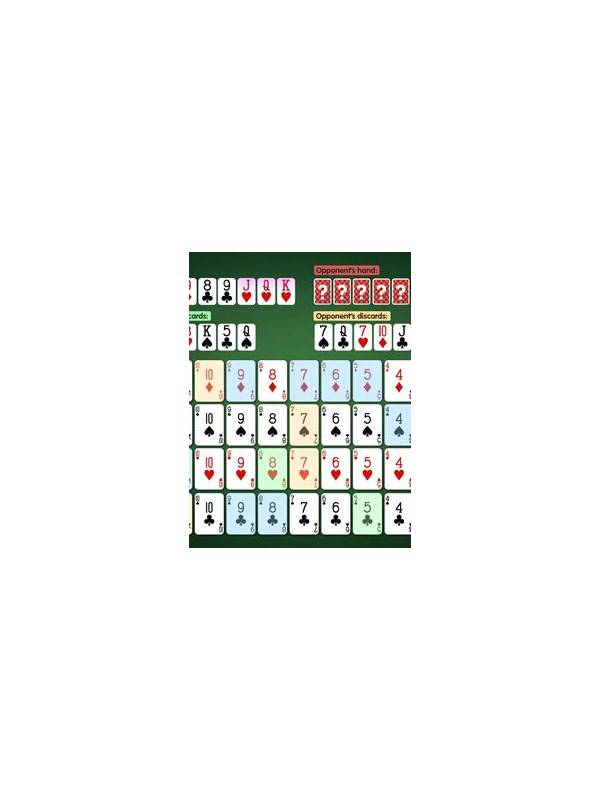
Rummy Guide: Use Connection Density to Choose a Starting Route

The first few cards in a rummy hand can suggest several attractive ideas at once. A pair may become a set, two suited cards may become a sequence, and an isolated card may connect in more than one direction. Instead of choosing a route because it looks exciting, try measuring its connection density. This is the number and quality of useful links available around the cards supporting that route.
Start by listing the cards that could belong to each possible group. A suited middle card often has neighbors on both sides, while an edge card has fewer natural links. A pair has a clear matching-rank possibility, but it may need a third card of the same rank. A three-card idea may already be complete or may need one very specific arrival. The purpose of the count is not to predict the exact next card. It is to compare how much room each route has to develop.
Next, separate shared links from independent links. If one card is needed by two different groups, it is doing double duty. Count it once, and mark the overlap. A route that appears to have many possibilities may actually depend on one critical card. By contrast, two small groups with separate supporting cards may be easier to manage, even if neither looks nearly finished.
Use connection density again after every draw. A new card can increase the density of one route while making another route unnecessary. Do not keep an old plan simply because you noticed it first. Ask which route now has the most useful links, the fewest required arrivals, and the safest discard consequences. If a route has lost its practical connections, release it before it occupies more space.
This method also helps with high cards. A high card can be worth holding when it is part of a dense, realistic route. It is less appealing when it is isolated and its only hope is a narrow match. Likewise, a low card is not automatically useful; it still needs credible neighbors or a rank partner.
Connection density is a decision aid, not a promise. Hidden cards, opponent actions, and variant rules create uncertainty. Use the measure to organize your thinking, then choose the route that keeps your hand understandable and your next decision manageable.
For a quick table version, give each route a low, medium, or high label rather than trying to calculate an exact number. A low-density route has one narrow requirement; a high-density route has multiple independent ways to improve. Revisit the label after a discard because the available space and information may have changed. This lightweight comparison is enough to stop a first impression from controlling the whole hand.
Related Post

Rummy Comparison: Fixed Goals Versus Flexible Goals
Compare narrow completion targets with flexible hand goals to choose the right level of commitment. [...]
Rummy Comparison: Passive Waiting Versus Active Reassessment
Comparing passive waiting with active reassessment shows why a patient plan still needs regular evidence [...]