Rummy Guide: Rank Your Unfinished Groups by Repairability

Two unfinished groups may look equally promising, but one may be much easier to repair. Repairability is a way to rank them. It asks how many sensible changes could improve a group and how much damage would occur if the group were abandoned. This view helps when a hand contains more ideas than it has room to support.
For each unfinished group, list its current cards and the missing relationships. A nearly complete sequence may need one neighboring card, while a scattered set idea may need a particular rank. Then note whether the group can grow in more than one direction or through another legal route. A group with several repair paths has higher repairability than one that depends on a single exact card.
Next, inspect the group’s cost. Count the cards tied to it that have no other job. A plan can be easy to improve but expensive to keep if it occupies several spaces and blocks a stronger structure. A smaller plan with one flexible card may be more repairable in practice because it preserves room for adjustment.
Use visible information carefully. If relevant cards have already appeared in the discard pile, lower the priority of a route that depends on them. If no evidence is available, do not assume the cards are held by one particular opponent. The purpose of table information is to update your comparison, not to create certainty about hidden hands.
Rank the groups as high, medium, or low repairability. Protect high-ranking groups while monitoring the others. Give medium groups a review point after the next draw. Release low-ranking groups when they carry point risk or prevent a more credible arrangement. The ranking can change immediately when a new card arrives.
Repairability is not the same as attractiveness. A visually neat group may have only one route, while an untidy pair may be capable of several useful changes. By comparing improvements, costs, and recovery after abandonment, you can make crowded hands easier to manage. The question becomes practical: “Which unfinished group can survive an ordinary draw, and which one needs a miracle?”
Do not confuse repairability with permission to wait forever. Even a repairable group can expire when too many turns pass or when its cards become expensive relative to the remaining options. Revisit the ranking after each important draw, and be willing to downgrade a group whose best repairs have disappeared. That willingness keeps a repairable idea from becoming an excuse for delay.
Related Post
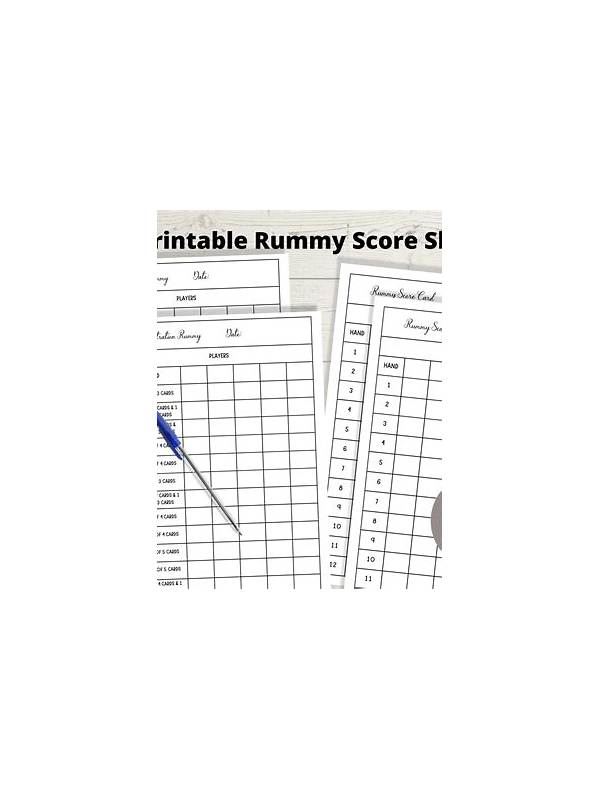
Rummy Tips: Use a Score Sheet That Explains the Round
A compact score sheet can preserve the decisions and context behind every rummy result. [...]
Rummy FAQ: What Is a Forced Discard?
A forced discard is a release made because the hand or rules leave very few [...]