Rummy Guide: Read a Discard Pile Without Chasing Every Signal
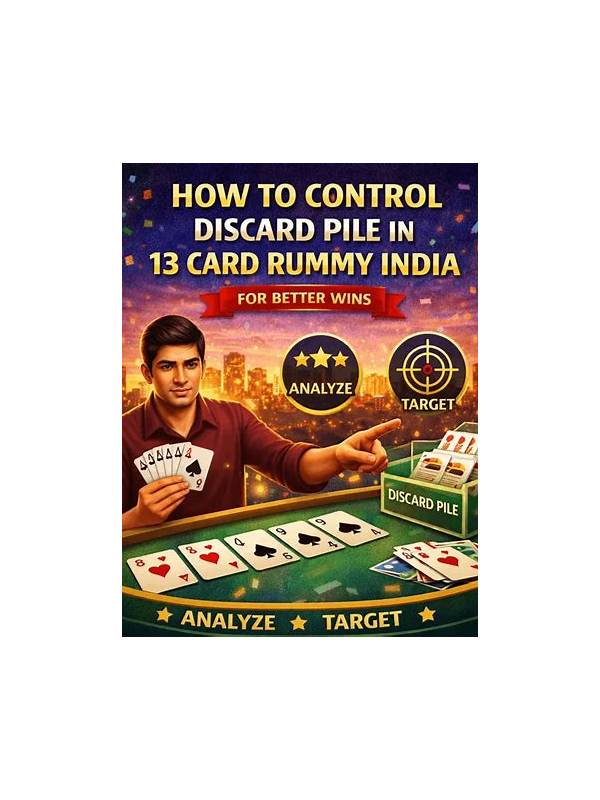
The discard pile contains public information, but not every card deserves equal attention. A useful read focuses on patterns that affect your decision rather than trying to reconstruct another player’s entire hand.
First, observe recency. The newest cards are the ones another player actively chose to release. That does not prove they are useless, but it provides a small clue about what they may not need. Older cards may still matter, yet they are less connected to the current decision unless the pile reveals a repeated rank or suit.
Second, look for repeated families. Several cards from one suit may indicate that a route has been visible to the table, while repeated copies of a rank may suggest that a set is becoming less likely. Treat these observations as probability adjustments, not certainty. Players can discard misleading cards, change plans, or simply receive hands that do not match your interpretation.
Third, compare the top discard with your own route. Taking a card is worthwhile only if it improves a credible group and the information cost is acceptable. A card that fits one narrow plan may be less valuable than a closed-pile draw that keeps your hand private and flexible. The pile should support your plan, not replace it.
Avoid chasing a visible sequence because it feels close. If you pick up one card, then keep additional cards only because you have already committed, you may create a sunk-cost trap. After every public draw, ask whether the route is stronger than it was before. If not, return to your discard queue.
Also watch what you release. A discard can reveal that a route has ended or that a card is no longer important. In a casual game, this may have little consequence; in a more competitive setting, avoid giving away a card that is an obvious connector when a harmless alternative is available. You cannot hide every intention, but you can reduce unnecessary information.
The discard pile is most useful as a context tool. It helps you evaluate one decision with more evidence, but it cannot tell you what another player holds. Use it to refine your priorities, then return attention to valid groups, replacement options, and the risk of carrying loose points. That balance keeps public information helpful rather than distracting.
Related Post
Rummy How-To: Reconstruct a Hand After the Round
Reconstructing key turns after a rummy round can reveal decision patterns without relying on vague [...]
Rummy Comparison: Focused Drills Versus Full-Round Repetition
Short sessions and long practice blocks develop different skills, so the better choice depends on [...]