Rummy Guide: Read a Hand From the End State Backward
Many players build groups forward: they see a pair, chase a neighbor, and continue until the hand becomes crowded with partial ideas. Working backward starts with the finish. Imagine a legal declaration, then identify the cards that must be arranged to reach it. This often exposes weak assumptions early.
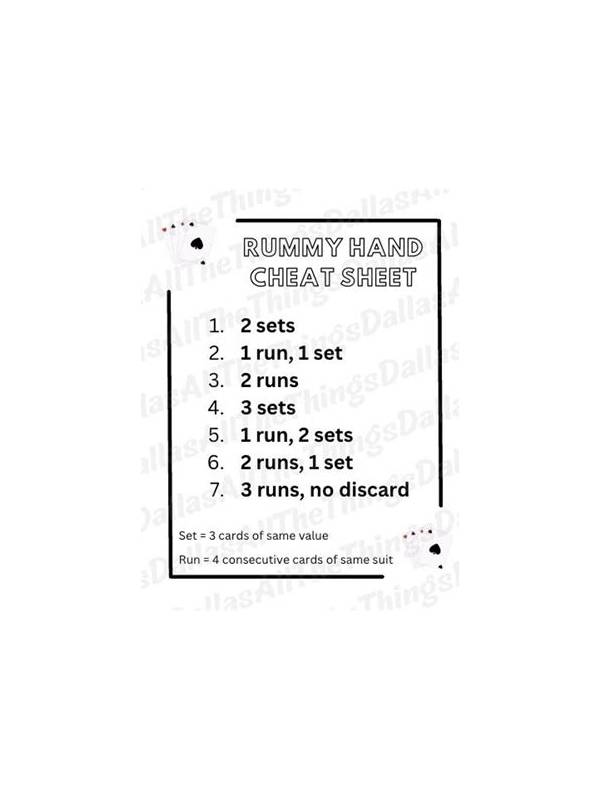
First state the format’s basic end requirements in your own words. For example, you may need a specified number of sequences, including a pure sequence, plus additional valid groups. Do not rely on a visual pattern alone. The exact requirement may differ between formats, so confirm it before using the method in a live game.
Now mark the group that satisfies the strictest requirement. If no group qualifies yet, identify the most realistic candidate and list what it is missing. Next choose a second group that can be completed without consuming the same essential card. This prevents one attractive sequence from carrying the entire plan.
Place the remaining cards into possible groups or a discard area. Any card that fits nowhere should be treated as a cost. Then ask what the next two draws must accomplish. If both draws must be exact, the plan is narrow. If several cards help, the plan is wider. This backward view makes the difference visible before you spend turns on it.
Repeat after each important draw. A new card may complete a required group, but it may also make another requirement impossible. Recheck the end state instead of celebrating the local improvement. The question is always: “Does this card move the whole hand closer to a legal finish?”
This technique is also useful after a loss. Reconstruct the last few turns and identify the point where the imagined end state stopped being realistic. You may discover that the issue was not a poor final discard but an earlier failure to protect the required group.
Backward reading does not remove uncertainty. It provides a clear test for whether uncertainty is productive. When the end state is legal, independent, and reachable through several cards, the hand has direction. When it is not, changing plans early is usually the stronger move.
Use a pencil or a temporary digital note during practice, but do not let the notation slow a live decision. The backward question can be as short as “What must be true at the end?” Once that requirement is clear, discard choices become easier to compare. You are no longer rewarding a card simply for fitting somewhere; you are checking whether it serves a necessary part of the finish.
Related Post
Rummy Comparison: Exact Draws Versus Broad Draws
Compare narrow and broad drawing plans by useful cards, deadlines, and penalty exposure. [...]
Rummy FAQ: What Is a Practical Out?
A practical out is a missing card that can arrive in time and improve a [...]