Rummy Guide to Reading a Hand by Its Tightest Constraint
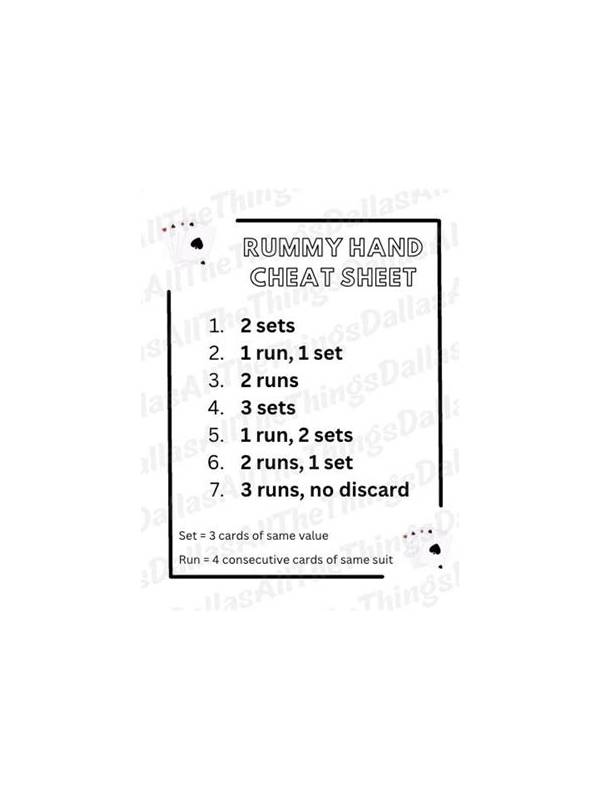
Many rummy hands look complicated because several cards appear useful at once. A useful way to simplify the position is to identify the tightest constraint: the group that has the fewest realistic ways to become complete. This is not the same as choosing the group with the most cards. A pair may have many possible extensions, while a four-card group can depend on one exact card.
Start by arranging the hand by suit and rank. Mark complete sequences, promising runs, pairs, and isolated cards. Then ask how many cards could improve each unfinished group. A pair such as eight and nine of the same suit has two immediate neighbors, while a pair of matching ranks may need a third copy from another suit. Count practical improvements rather than every theoretical possibility.
The tightest constraint deserves attention, but it does not automatically deserve unlimited turns. Give it a deadline. If a plan needs one exact card and competing cards are becoming easier to use elsewhere, decide in advance when you will abandon it. This keeps a hopeful idea from quietly consuming the whole hand.
Compare the constraint with your penalty exposure. A high isolated card may be worth releasing even when it is not the tightest group, because holding it costs more if the round ends. Conversely, a low card can still be a poor keep if it blocks two better arrangements. Evaluate completion distance, point cost, and flexibility together.
Before each turn, repeat three questions: What is hardest to finish? What is my deadline for it? What card can leave without damaging a stronger route? This short routine turns a vague hand into a ranked set of obligations. It also makes post-game review easier because you can see whether the constraint was correctly identified or merely felt urgent. One practical worksheet is to list each group, its missing cards, its point exposure, and its fallback. Give every line a confidence label. A group with one missing card but only one out may be narrow; a group with two missing cards and many outs may be more promising. The worksheet prevents visual size from substituting for analysis. It also encourages you to reassess after a draw rather than defending the first arrangement you noticed. With practice, the tightest constraint becomes a quick mental checkpoint that guides attention without dictating every move. For reliable practice, make the check before looking at the next card. State your choice in one sentence and note the alternative you rejected. This creates a small record of reasoning rather than a result-only judgment. The habit is valuable in both favorable and unfavorable rounds because it shows whether the process stayed consistent when the hand changed.
Related Post
Rummy Comparison: Single-Card Hopes Versus Multi-Route Value
Compare a narrow draw that needs one card with a flexible card that supports several [...]
Rummy FAQ: What Makes a Draw Informative?
An informative rummy draw changes what you know, even when it does not immediately improve [...]