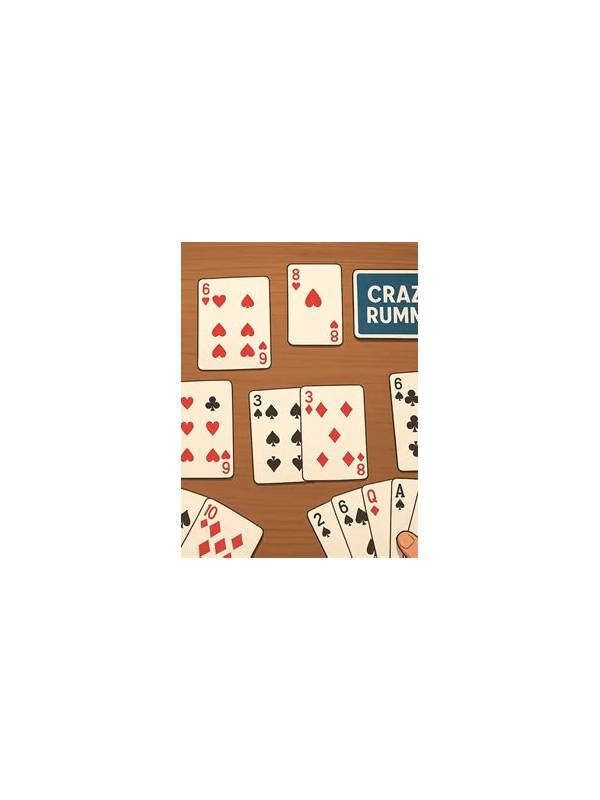
Rummy Guide: Choose a Starting Sort That Reveals Options

The first few seconds after a rummy deal are useful for orientation, not for making a permanent plan. A good starting sort should reveal possible sequences, sets, and awkward cards at the same time. If the arrangement hides one of those categories, later decisions become slower and less reliable.
Begin by grouping cards by suit, but leave a little visual space between neighboring ranks. This makes runs such as 5-6-7 easy to spot while also showing gaps such as 5-7. Then scan vertically, or by rank, for duplicate values that may form a set. The purpose is to see relationships from two directions rather than to arrange the hand beautifully.
Next, mark cards that have more than one possible job. A 6 of hearts might extend a 4-5 heart sequence, connect to a 7, or sit near another six. Flexible cards deserve attention because discarding one can close several routes. Conversely, an isolated high card with no nearby support is often a candidate for early disposal, subject to what the table is showing.
Avoid sorting every card into a completed-looking group before you understand the gaps. Neat blocks can create false confidence. Keep incomplete combinations visible, and mentally label each as strong, moderate, or speculative. A strong route needs one missing card with several plausible sources; a speculative route may need a narrow card that opponents are likely to hold.
After the initial scan, choose only two or three working routes. Too many possibilities consume attention and encourage hopeful holding. Reassess after every draw, especially when a new card creates overlap. The best sort is not the one that looks most organized. It is the one that lets you answer quickly: which cards are connected, which are expensive, and which draw would genuinely improve the hand?
Practice this routine in free play by taking a screenshot-free mental inventory before the first move. With repetition, you will recognize structure sooner while keeping enough flexibility to change direction. One useful variation is to sort twice. First sort by suit to find sequences, then briefly regroup by rank to find sets. Return the cards to your normal layout afterward. This double view can reveal that a card you treated as deadwood is actually supporting two different plans. Do not spend so long arranging that the timer becomes a problem; the exercise is about recognition, not presentation. Over time, a quick suit-and-rank scan becomes an automatic opening ritual that leaves more attention for the changing table.
Related Post

Rummy Guide: Distinguish a Blocked Route From a Slow Route
Knowing whether a plan is blocked or merely slow helps you decide when to continue [...]
Rummy Card Counting Myths: What Observation Can and Cannot Do
Learn the difference between noticing discards and believing that memory can guarantee the next rummy [...]