Rummy Hand Symmetry: Find Duplicate Plans Before They Cost a Turn
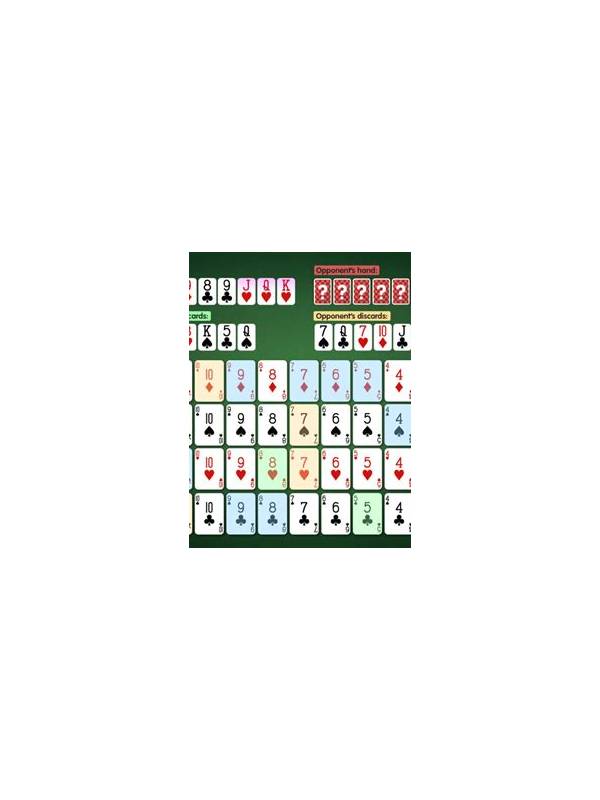
Rummy hands can look tidy while hiding a planning problem: several cards may be waiting for the same missing rank or suit connection. The cards appear related, but the hand has fewer independent ways to improve than it seems. A quick symmetry check helps expose that duplication before it consumes another draw.
Start by grouping cards according to the job you want them to perform, not simply by suit. For example, a six and eight of the same suit may both be waiting for the seven. Two other cards may also depend on that same rank in a different arrangement. On paper, four cards seem active. In practice, one draw may solve only one part of the picture. Mark these cards as sharing a dependency.
Next, count independent routes. A route is a realistic way a card can join a legal group or sequence. If two partial groups need the same single card, they are not two equally strong projects. They are competing versions of one project. Keep that distinction visible when comparing a discard. A card that opens a second route can be more useful than a card that merely makes the original route look closer.
This does not mean duplicated plans should be discarded immediately. A shared dependency can still be valuable when the cards have low point value, when one card has a second use, or when the missing rank is already known to be available under the table’s rules. The check is about accuracy, not a fixed command. Ask whether the overlap is giving you flexibility or just making the hand look busy.
Use a three-label method during practice: independent, shared, and blocked. Independent cards support different realistic completions. Shared cards rely on the same missing resource. Blocked cards have no current route beyond a speculative draw. After each draw, update only the labels affected by the new card. This prevents a single improvement from making you rebuild the entire hand mentally.
Before the next discard, ask three questions. Which cards depend on the same missing card? Does one of those cards have another useful role? Which choice creates an independent backup route? The answer may favor a high-point single, a redundant connector, or even a card that looks promising but has become too narrow.
The goal is not to eliminate every overlap. Strong hands often contain connected cards with shared possibilities. The useful habit is recognizing when apparent variety is actually repetition. Once you can see duplicate plans, you can compare cards by the number and quality of routes they preserve rather than by visual closeness alone.
Related Post

Rummy How-To: Use Suit Distribution to Reduce Clutter
Sorting cards by suit can expose which plans are real and which are only visual [...]
Rummy FAQ: How Many Alternatives Should a Hand Keep Alive?
Keeping a small number of supported alternatives helps flexibility without turning every card into an [...]