Rummy How-To: Audit a Sequence Before You Commit to It
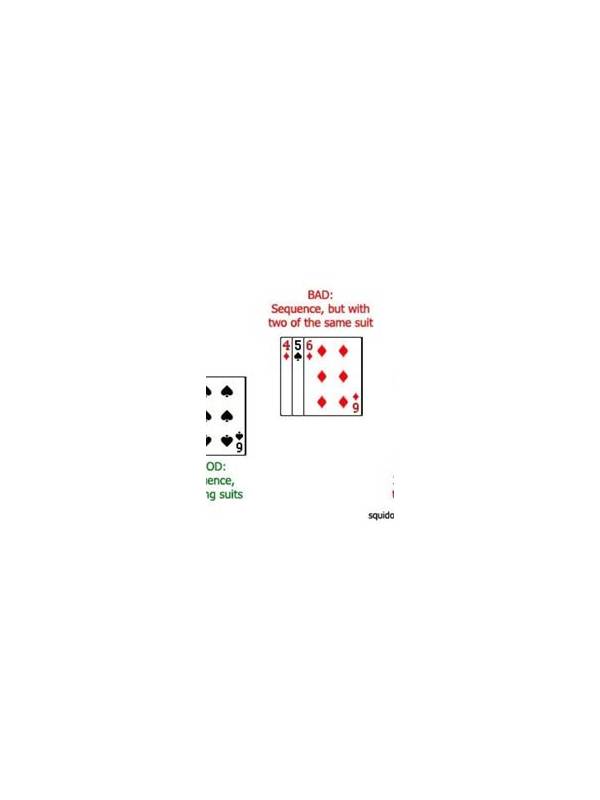
A sequence can look nearly complete while still being a poor foundation. Before committing several cards to it, perform a quick audit. The audit is especially useful when a group uses middle cards that could serve more than one purpose.
First check continuity. List the cards in order and identify the exact gaps, not just the general shape. A group containing five, six, and eight has one obvious missing seven, while a group containing five and eight has several possible routes. Next confirm that the cards belong to the same suit if the format requires a suited sequence. A numerical pattern across different suits may be visually persuasive but legally useless.
Then count flexibility. Ask how many realistic cards would improve the group and whether those cards also help another group. A plan that accepts four useful cards is usually healthier than one waiting for a single card. However, do not count every theoretical card. Exclude cards that are already visible in a way that makes them unavailable or that would leave the rest of your hand unmanageable.
The final check is time. Compare the number of missing cards with the turns you can reasonably expect. If the sequence needs two separate improvements and you have only two turns, it offers little room for a bad draw. Also consider the penalty of keeping its cards. A low-value sequence can be worth a patient attempt; a high-value isolated card should face a stricter standard.
Write the result in one sentence: “This sequence needs one common card, supports another group, and fits the remaining turns.” If you cannot describe it clearly, keep it provisional. Re-audit after a major draw or discard. A sequence is a working plan, not a promise, and the audit helps you leave it before it becomes expensive.
An audit is also helpful after a sequence appears to improve. Adding one card can create a new overlap with another group, and that overlap may be more valuable than the original arrangement. Check whether the new card should be locked, shared temporarily, or moved. If you play online, use the interface’s grouping features only as a visual aid; they do not replace the format’s actual rules. A deliberate pause before committing lets you catch a hidden dependency while the hand still has room to change. With practice, the audit becomes a quick internal checklist rather than a long calculation. Keep the audit proportional to the situation. A quick check before a routine discard may take only a few seconds, while a declaration deserves a full review of every group and rule condition. The habit matters more than the length of the checklist. When the hand changes sharply, start the audit again instead of editing an old conclusion.
Related Post

Rummy Comparison: Known Cards Versus Assumed Cards
Separating visible evidence from assumptions improves decisions about draws, discards, and incomplete groups. [...]
Rummy Tips: Use Short Timeouts to Protect Decision Quality
A brief, planned pause can prevent rushed rummy choices while keeping a session within its [...]