Rummy How-To: Build a Contingency Route for a Weak Hand
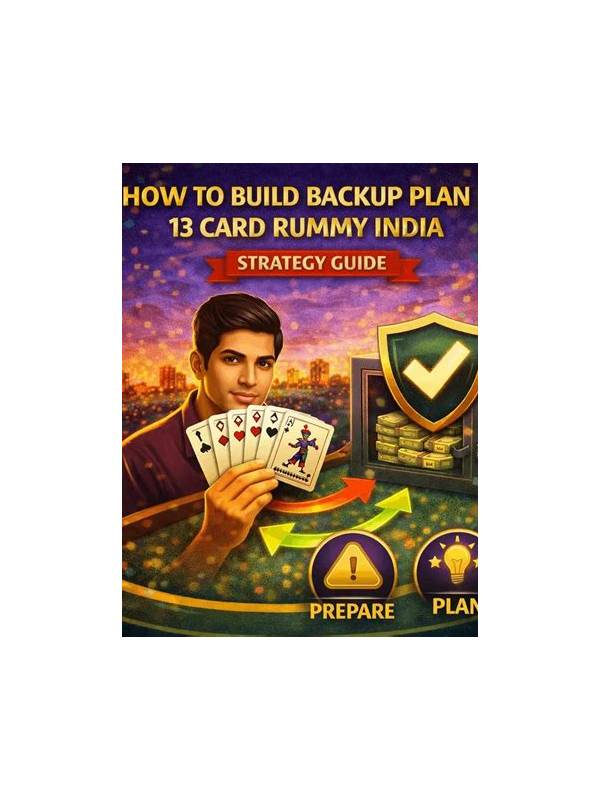
A weak opening hand becomes more manageable when it has two possible routes instead of one fantasy route. A contingency route is a backup plan that can still produce valid groups if the preferred cards do not arrive. It does not mean keeping every possibility alive. It means reserving a small amount of flexibility while you test the strongest structure.
Begin by sorting the hand into three categories: groups that are already usable, groups one card away, and isolated cards. Mark the first category as protected. Then compare the near-groups by the number of realistic cards that would complete them. A route needing one of several cards is usually more practical than a route needing one exact card and an additional repair.
Choose one primary route and one contingency. For example, your primary plan might extend a same-suit run while the backup uses a matching-rank set. Avoid keeping three or four competing projects; they consume space without creating a decision. The contingency should share as few fragile assumptions as possible with the primary route.
Give the backup a review point. After the next one or two draws, ask whether it has gained support. If it has not, discard its weakest card and transfer attention to the better-supported structure. A contingency is useful only while it remains credible. Keeping it indefinitely can turn flexibility into clutter.
When choosing between routes, consider more than completion speed. Ask which route keeps your hand valid, which route leaves fewer high-point cards exposed, and which route relies on information you do not have. A slower route with several repair options may be safer than a fast-looking route that needs one exact card.
Do not treat an unsuccessful contingency as a mistake. A backup exists to manage uncertainty, not to guarantee a result. After the hand, note when the route stopped being credible and whether you noticed that moment in time. With practice, you will learn to preserve options early and release them cleanly when evidence favors another structure. Keep the contingency small enough to explain in one sentence. If you cannot name the backup route and its review point, it may be a collection of wishes rather than a plan. Clear language makes it easier to act when a new card arrives, because you already know what evidence would promote the backup or end it.
Related Post
Rummy Comparison: Manual Sorting or Automatic Card Arrangement
Comparing manual and automatic card sorting can help players choose the arrangement that best supports [...]
Rummy Comparison: One Strong Route or Several Small Routes
Comparing concentrated and flexible hand plans clarifies when a single route is safer than preserving [...]