Rummy How-To: Build a Discard Priority Queue
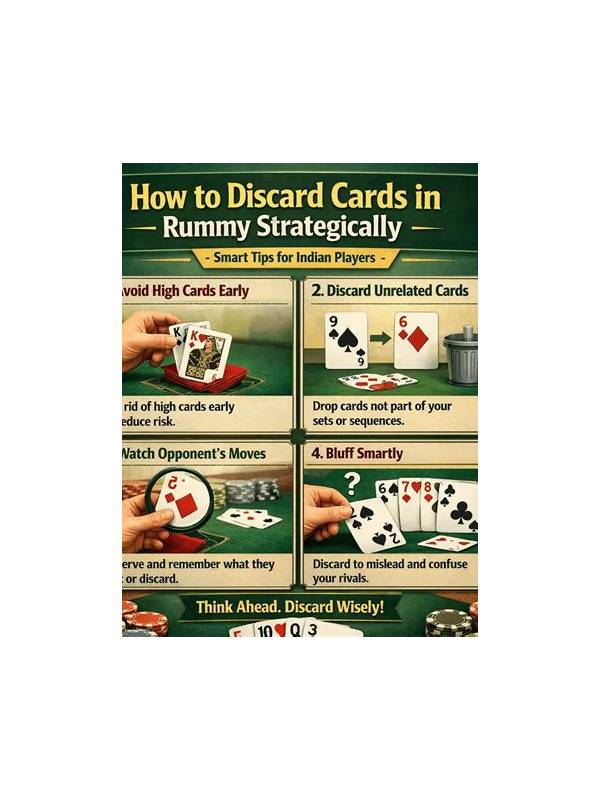
When several cards look discardable, choosing one at random can damage a promising hand. A discard priority queue provides a repeatable order. It is not a fixed list that applies to every deal. Instead, it ranks cards according to their current job, risk, and potential so that the decision stays connected to the hand’s structure.
Start with cards that are both isolated and expensive. A lone high card with no credible sequence or set route usually deserves early attention. Next consider low-point cards that are isolated but flexible. They may be safe to hold briefly, yet they still need a reason to remain. The queue should distinguish “low cost” from “useful,” because a small point total does not create a valid combination.
Place cards already in a required pure sequence at the bottom of the queue. Protect them unless a new arrangement clearly improves the hand. Other completed groups also deserve protection, but check whether a card is doing double duty. A middle card that belongs to a group and connects to a second route may be more valuable than its group membership alone suggests.
For incomplete groups, rank by route strength. A card that needs one of several practical neighbors should usually be kept ahead of a card that needs one exact, unseen rank. Also account for visible discards and the cards you have already rejected. If evidence makes a route less likely, move its supporting cards upward in the queue. A queue should change as information changes.
Add a penalty for revealing useful information. Discarding a card that obviously completes a common sequence can help another player, while releasing a high isolated card may be both safer and more valuable. This is not a reason to hoard every connected card. It is a tie-breaker after you compare your own completion progress.
Before each discard, inspect the first two candidates rather than the entire hand. Ask why the top candidate is ready to leave and what would make the second candidate better. This small pause reduces impulsive releases and keeps the process quick enough for live play. After the hand, note whether the queue’s top choice was supported by later information.
The queue works because it converts vague discomfort into an ordered decision. You still need judgment, but the judgment is focused: protect required structure, favor credible routes, reduce point exposure, and update when evidence changes. Over time, reviewing your priorities will reveal whether you tend to keep expensive hopes or discard useful flexibility too quickly.
Related Post

Rummy FAQ: Why Do Attractive Pairs Become Traps?
A pair can be useful, but its value falls when it has no realistic path [...]
Rummy Error Recovery After a Misclick
Follow a calm response sequence when an accidental draw or discard changes your hand. [...]