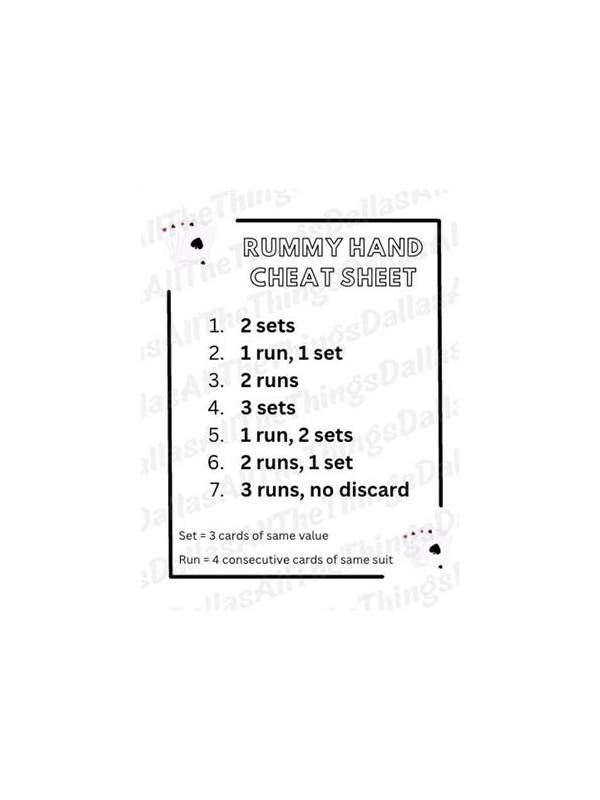
Rummy How-To: Create a One-Page Session Debrief
A debrief is most useful when it is short enough to complete while the session is still fresh. One page provides a boundary: enough space to record patterns, not enough space to rewrite every hand or defend every result.
Divide the page into four boxes
The first box is “objective.” Write what you meant to practice, such as identifying release conditions or following a stopping time. The second is “observations.” Record visible patterns without judging them. The third is “decisions.” Choose one or two moments worth reviewing. The fourth is “next session.” Write one experiment and one safety boundary.
Describe patterns, not identities
Use neutral language: “kept two narrow routes after the second miss” is more useful than “I played badly.” A pattern can be changed. A label about personal ability usually adds pressure without adding information.
Separate results from choices
Record wins, losses, or incomplete hands in a small result line, but do not let that line dominate the page. For each selected decision, write what was known before the action and what you would test next time. The result may be included as context, not as proof.
Include a stopping review
Ask whether you ended at the planned boundary, whether fatigue changed your pace, and whether any technical or rule ambiguity appeared. These questions protect the routine around the game. If a session ended because attention became urgent, the next experiment may simply be a shorter block.
Close the page decisively
Choose only one strategic experiment and one environment adjustment for next time. Save the page in a private, organized location without account credentials or payment information. Then stop reviewing. A debrief succeeds when it turns experience into one manageable improvement and lets the session remain finished.
If the page is full before the session is complete, stop adding detail and mark the remaining hands for a later review. The boundary is part of the method. A debrief should not recreate the extended attention that made the session difficult. One clear observation, one testable adjustment, and one protected stopping condition are enough to support the next practice block. If you review the page a day later, read the objective and observation before reading the result. This restores the order in which the decision was made. Mark only one sentence for follow-up, then close the file. The debrief should create a bridge to the next session, not an obligation to keep revisiting the previous one.
Related Post

Rummy How-To: Build a Final-Turn Checklist
A compact final-turn checklist reduces avoidable declaration errors when a hand is nearly complete. [...]
Rummy Safety: Create a Personal Data-Minimization Routine
Sharing less personal information during play reduces avoidable privacy and account risks. [...]