Rummy How-To: Sort a Hand by Function Instead of Suit
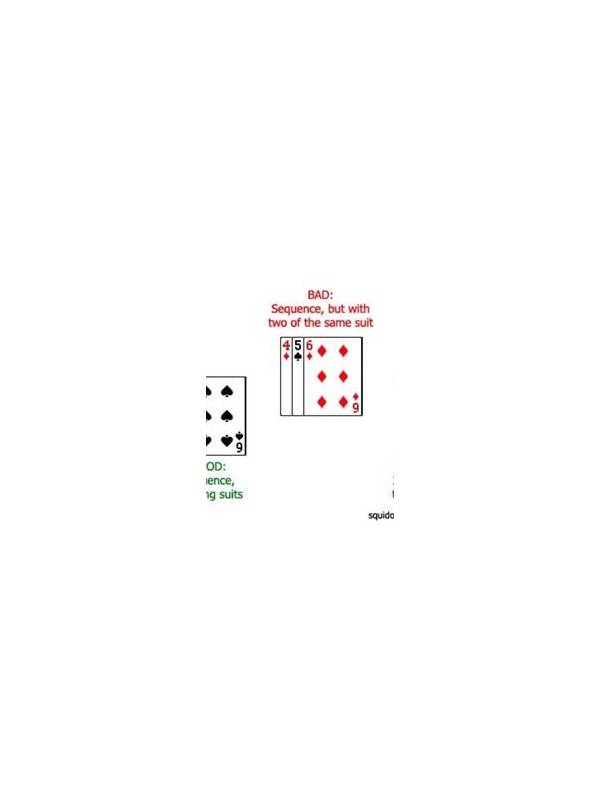
Sorting cards by suit is familiar, but it does not always show what a hand needs. A function-based sort places cards into working sequences, possible sets, flexible connectors, and release candidates. The arrangement makes decisions visible without claiming that any group is guaranteed.
Start with confirmed or nearly confirmed structures. Put cards that already form a legal group together, but check whether they meet the format’s requirements. A set may be complete yet still leave the hand without a pure sequence. Label structures by function, not by confidence, so you do not mistake a complete-looking group for a finished declaration.
Create a second area for active possibilities. These are cards that can join more than one realistic group or need one plausible card to become useful. Keep this area small. If every card is described as a possibility, the label stops helping. Give each possibility a condition such as “needs a connector” or “supports either of two sequences.”
Place high-point, disconnected cards in a release area. They may move out if no clear connection appears, especially when keeping them prevents a lower-cost plan. A release candidate can return to an active area after a new card changes the structure, but it should not remain protected simply because it was part of the opening hand.
The final area is for flexible connectors. These cards may not look impressive, but they can preserve more than one route. Recheck them after every draw because flexibility can disappear when neighboring cards are discarded or when a stronger plan emerges.
This layout is useful during practice and can be adapted to an app’s sorting controls. It is not a reason to pause excessively during a timed game. With repetition, the categories become mental: confirmed, possible, flexible, release. Before discarding, ask which category the card truly belongs to and what the hand would lose if it left.
Function-based sorting reduces visual clutter and limits attachment to cards that merely look connected. It also makes post-game review easier because you can ask whether a card was placed correctly at the time, rather than judging it only by the final result.
Do not keep a card in the flexible category indefinitely. Give it a condition and a review point, just as you would with any other draw. If it has not gained a clearer role, move it to the release area. Categories are useful because they change as evidence changes.
Related Post

Rummy FAQ: Should You Pick Up a Card to Hide Your Plan?
Taking a card only to confuse opponents is usually weaker than choosing the draw that [...]
Rummy Practice Note 175: A Structured ReviewRummy FAQ: What Makes a Discard Low-Information?
A structured original note for reviewing decisions and safer play.Learn why some discards reveal little [...]