Rummy Practice: Compare Sequence Edges and Middle Ranks
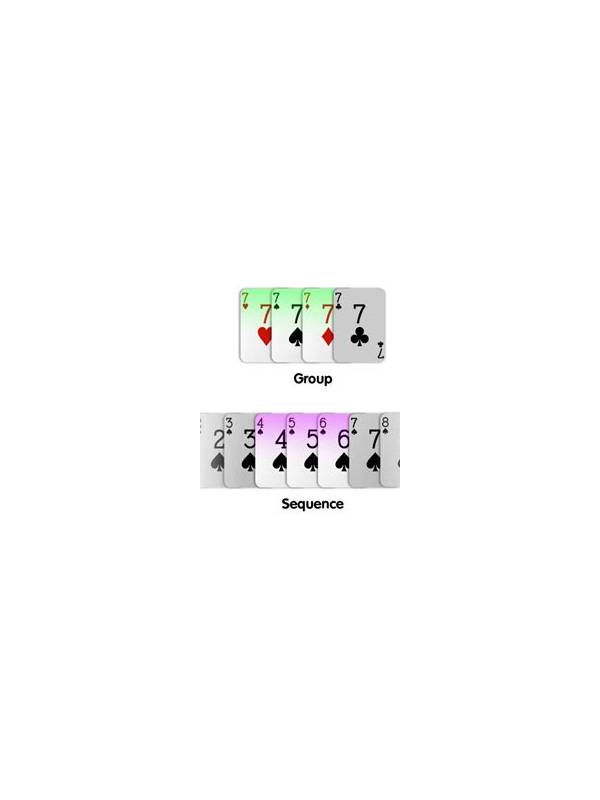
Do not turn the exercise into a promise that a particular rank will arrive. The map shows structure, not probability or entitlement. Pair the diagram with a decision: keep, release, or wait for evidence. Then explain what makes the choice reversible. This keeps practice connected to disciplined play and avoids the common mistake of treating a visually attractive pattern as a guaranteed sequence.
Make the drill more realistic by presenting two candidate arrangements and asking which one offers the better next question. One may have a neat partial run; the other may have more than one way to improve. Explain what information would change your choice. This teaches that sequence space is a way to compare plans under uncertainty, not merely a collection of patterns.
Sequence space is the set of legal ways a card can connect with nearby cards of the same suit. Studying it away from a live table helps you recognize useful relationships quickly. The exercise requires no money and can be done with a physical deck or permitted practice mode.
Choose a small group of cards from one suit and place them in rank order. Mark adjacent runs, one-card gaps, and isolated ranks. For example, a run of three is already a strong structure, while two cards separated by one rank are a conditional plan. Do not treat every neighboring idea as equally valuable; write down the exact card needed.
Now remove one card and ask what changes. Does the remaining pair have one connection or several? Does a high or low edge card have fewer neighbors than a middle card? Repeat with different suits and ranks. This builds a visual understanding of why some cards are flexible and others are narrow.
Add a discard-pile constraint to the drill. Place a few cards face up as unavailable information, then reassess the same hand. This teaches you to update a plan rather than continue with the original diagram. If your format uses jokers, include them only after you understand the natural-card examples and follow the exact joker rules.
Keep a record of the decisions, not just the answers. Write why you would hold one card and release another. A good explanation mentions completion distance, available companions, and the effect on the rest of the hand. Avoid claiming certainty from a small sample.
Finish by shuffling the cards and repeating the exercise under a short time limit. Speed should come after accuracy. If the timer causes mistakes, remove it and return to careful mapping. The goal is a dependable recognition habit that supports real decisions without replacing attention to the current table.
Related Post

Rummy FAQ: When Does the Discard Pile Tell You Enough?
The discard pile offers clues, but a few cards rarely justify certainty about another player’s [...]
Rummy Guide: Test a Strategy With a Small Sample
A controlled mini-review can tell you whether a new habit is promising before you build [...]