Rummy Tips: Give Every Unsorted Card a Temporary Role
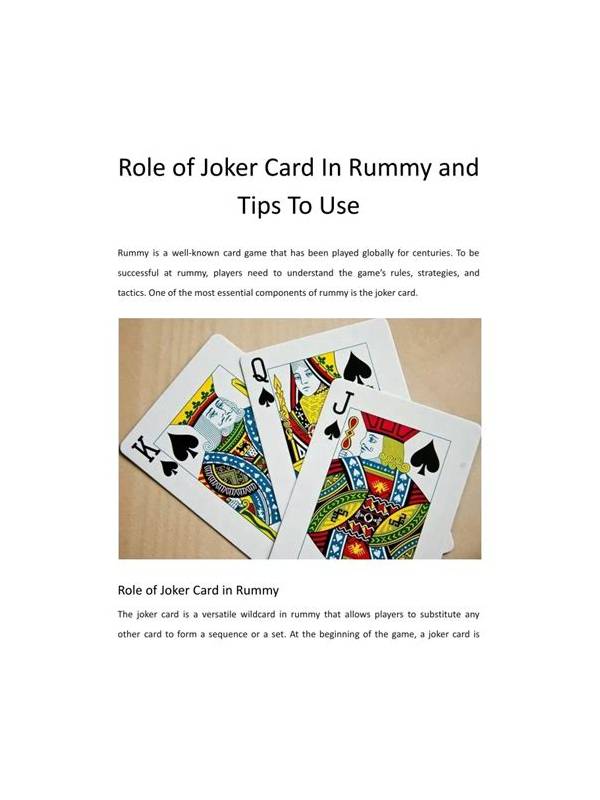
An unsorted card creates mental noise because it appears to belong nowhere. Instead of repeatedly reconsidering it, give it a temporary role. The role can be “possible sequence,” “possible set,” “point-reduction candidate,” or “unassigned.” This label is not a promise. It is a placeholder that makes the next review more efficient.
Choose the role using the card’s strongest current connection. A card next to two cards of the same suit may begin as a sequence candidate. A repeated rank may begin as a set candidate. A high-point isolated card may be a point-reduction candidate even if it has no attractive combination. Avoid assigning a role based only on what you hope to draw.
Write or arrange the cards so each role is visible. If the interface allows sorting by suit, keep a separate mental marker for cards that could move between plans. The point is not to create a rigid system that slows you down. It is to prevent one isolated card from being counted optimistically in three different groups at the same time.
At the next draw, update roles rather than starting over. A new connector may promote a card into a sequence. A visible discard may remove a route from consideration. If a card remains unassigned after several turns, that is useful evidence: it may be time to discard it or use it to reduce points. Temporary roles should expire when they stop explaining a realistic action.
This method also improves review. After a round, you can ask whether a card stayed in the wrong role too long. Perhaps an attractive pair was kept after its supporting cards appeared publicly, or perhaps a high-point card was discarded too early while it still served a clear plan. The answer helps refine your evaluation of connections.
Temporary roles turn uncertainty into a manageable workflow. They do not make a weak card strong, but they stop the hand from becoming a pile of unexamined hopes. Label, test, update, and release when the evidence changes.
Roles can be especially helpful in the middle of a fast round, when there is not enough time to rebuild every combination. A quick label tells you what question to ask: does this card still support its assigned group? If not, move it to the discard list or give it a new role. This habit makes organization dynamic. The hand is not a set of permanent commitments; it is a set of working hypotheses that should respond to new information.
Related Post
Rummy Comparison: Immediate Melds Versus Flexible Holding
Choosing between an immediate group and a flexible holding depends on rules, timing, and alternatives. [...]
Rummy FAQ: What Does a Dead Card Mean in Practice?
This plain-language FAQ explains how to recognize a card that currently adds little value to [...]