Rummy Tips: Plan the Discard Before Drawing
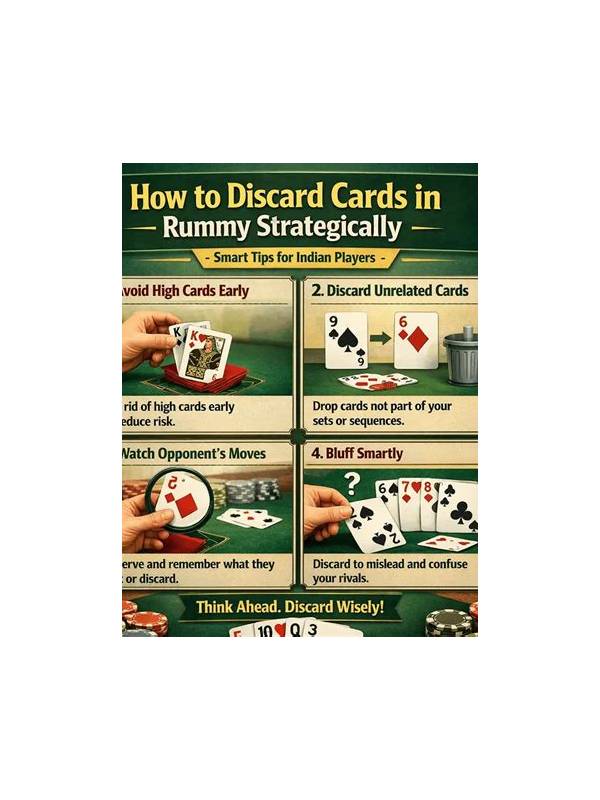
At the end of the turn, explain the discard in terms of the comparison: “I kept the new card because it opened two routes, and released the baseline because it had one.” If you cannot give that explanation, review the hand before the next game. Clear reasons make both good decisions and mistakes easier to recognize.
Change the tentative discard freely when public information changes. The point is not to defend a prediction; it is to create a useful baseline. If an opponent exposes a related meld or the open pile changes, recalculate the risk. A flexible baseline keeps the method analytical while still allowing the hand to develop in unexpected directions.
Many turns begin with the draw and end with a hurried discard. Reversing part of that habit can improve your choices. Before drawing, identify the card you would most likely release if the new card adds little value. This creates a baseline for judging the draw instead of allowing novelty to make every card seem worth keeping.
Choose the baseline using three tests. Does the card have few legal connections? Does it carry meaningful penalty or occupy space needed by a better route? Is it relatively safe compared with your other candidates? The baseline is provisional; you can change it when the draw changes the hand or new public information appears.
After drawing, compare the new card with the baseline and with your current weakest card. A card is worth keeping when it creates a realistic improvement that outweighs the value of the card you release. If it only creates another conditional pair, it may not beat a card that already supports a flexible route. This explicit comparison prevents “just in case” accumulation.
The method is especially useful when drawing from an open pile. The visible card may be tempting because its usefulness is obvious, but taking it can reveal information or cause you to retain a weak companion. Decide whether the card improves the complete hand, not just one group. If it does not, leave it.
Practice the routine with untimed deals. Say the baseline aloud, draw, and explain the final discard in one sentence. With repetition, the process becomes quick enough for live play. It does not predict the future, but it gives each turn a disciplined starting point and makes your reasoning easier to review.
Related Post
Rummy Strategy: Value a Card That Blocks Your Own Plan
A card can look useful while quietly preventing two groups from forming, so check conflicts [...]
Rummy How-To: Build a Fresh-Draw Decision Routine
Use a repeatable four-step routine to evaluate every new card without rushing into a new [...]