Rummy Tips: Treat Unused Cards as a Search Problem

When a rummy hand contains several cards that do not fit anywhere, it is easy to call them useless. That label hides the real decision. Each unused card may belong to more than one possible group, and the task is to compare those routes without keeping every idea alive forever.
Begin with a simple inventory. Separate cards that are already committed to a confirmed group, cards that support one unfinished route, and cards with no current role. Do not count the same card twice when comparing plans. A card that appears in two possible sequences is flexible, but it cannot complete both at once.
For each unused card, list its nearest realistic connections. Consider rank adjacency, duplicate-rank opportunities, and whether the needed cards are already visible in the hand or discard information. A route needing one card is different from one needing two precise cards. A route that uses a high-point card may also carry more downside if it fails.
Now rank the routes by repair cost. A low-cost route needs one plausible addition and leaves the other cards free. A high-cost route needs several exact draws or forces you to preserve unrelated cards. This does not mean a low-cost route always wins. It means you can explain why you are choosing the more demanding route when you do.
Set a review limit. After one or two turns without supporting evidence, downgrade a route instead of defending it. Release a card when it has no confirmed group, no flexible connection, and no useful role in a backup plan. This is a practical search rule: explore promising branches, then prune branches that keep consuming space.
The method is useful during practice because it creates a record of reasoning. After the hand, check whether your chosen route was actually low cost or whether you merely liked its appearance. Over time, this review improves your ability to distinguish possibility from progress. You can also use this method when reviewing a discarded card. Ask what route it supported at the time and whether keeping it would have created a better hand or simply delayed an inevitable release. That comparison helps prevent hindsight from turning every missed card into a mistake. The search problem is always based on information available before the result. The same framework can be applied to a new draw before you decide whether it belongs. If it supports one route but blocks two better cards, its apparent usefulness may be misleading. Ask what space it consumes and what evidence would justify keeping it. A small written table of card, route, and repair cost can make practice reviews more consistent without pretending that every outcome is predictable.
Related Post
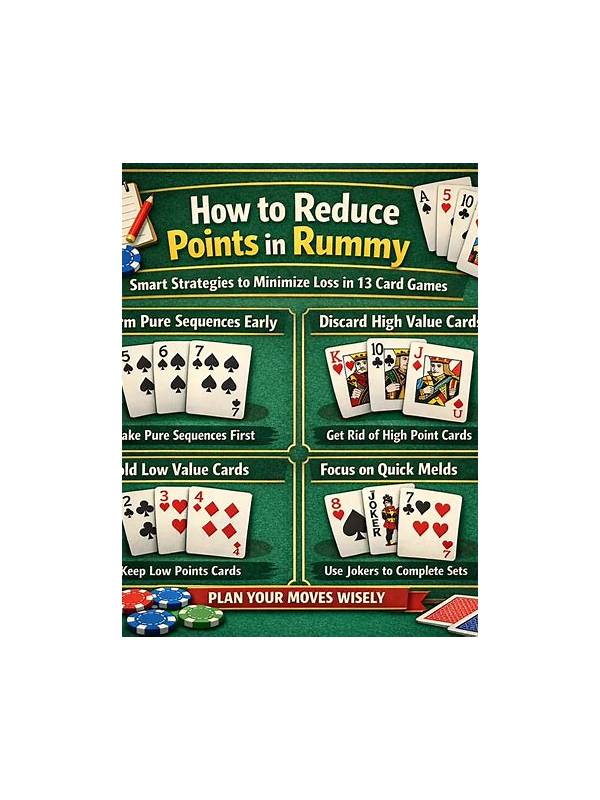
Rummy Tips: Reduce Dead Weight One Card at a Time
Removing isolated cards systematically can make a difficult rummy hand easier to complete and safer [...]
Rummy Comparison: Keeping a Pair or Chasing a Run
Compare the stability of a pair with the wider but sometimes slower possibilities of a [...]