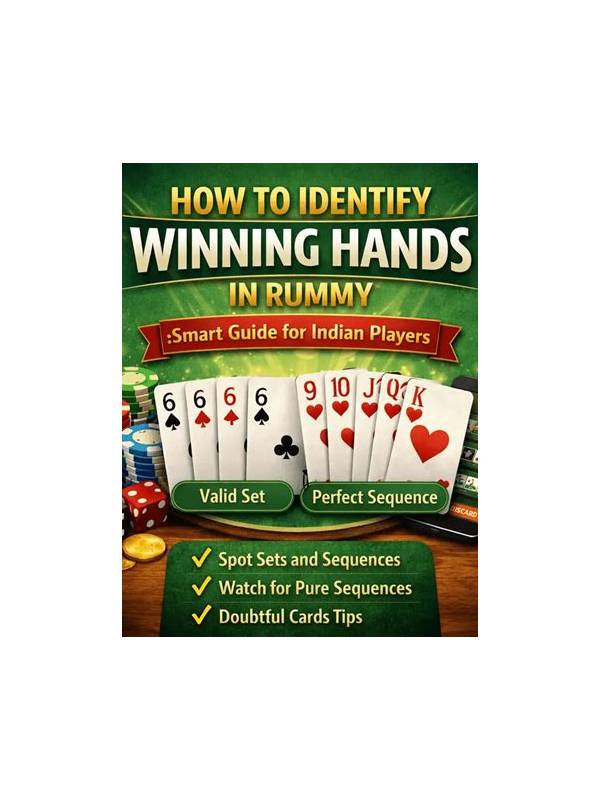
Rummy Tips: Use Short Timeouts to Protect Decision Quality

Speed can change how you see a hand. Under a timer, you may keep a card because it looks familiar, discard before checking the whole arrangement, or click through a prompt without reading it. A short timeout routine creates room for one careful scan.
Use a pause when a decision has unusually high cost: a large discard, an unfamiliar rule, a payment prompt, or a hand with several conflicting routes. Keep the pause proportionate to the format and its timer. The goal is not to freeze the table; it is to use the few seconds available intentionally.
During the pause, name your required structures first. Then identify the card with the fewest believable jobs. Finally, check whether the chosen action leaves at least one practical backup. This order prevents a tempting draw from taking over your attention before you know what the hand needs.
If the timer is too short for a full review, simplify the process. Check legality, point exposure, and the effect on your main route. Do not try to calculate every possible future. A compact checklist is more reliable than a complicated theory you cannot finish.
Timeouts also help with emotion. If you notice repeated clicking, anger at a missed card, or a desire to recover a loss immediately, pause the session rather than forcing another hand. A technical timer and a personal stop rule are separate: the first manages the turn, while the second protects your wider boundary.
After the session, note whether the timeout helped. If it repeatedly came too late, move the trigger earlier. If you paused for every ordinary choice, shorten the checklist. Over time, the routine should become a calm reset that protects attention without turning a recreational game into a stressful test. If the application has an accessibility or pause feature, learn its limits before relying on it. Some tables continue running while a menu is open, and some do not permit a pause at all. Never use a timeout to extend a session beyond your personal boundary. The best routine respects both the table’s mechanics and your own decision to stop when concentration is fading. You can rehearse the pause offline by taking a sample hand and giving yourself ten seconds for the same three checks. The exercise builds recall without adding financial pressure. When the pause exposes confusion about a rule, stop the drill and confirm the rule before using the setting again.
Related Post
Rummy Comparison: One-Page Review Versus Full Hand Journal
A one-page review is fast and repeatable, while a full hand journal preserves detail for [...]
Rummy Practice: Rebuild a Hand Using Only Three Anchors
This paper exercise trains you to find the most dependable parts of a hand before [...]