Rummy How-To: Build a Discard Queue for Awkward Cards
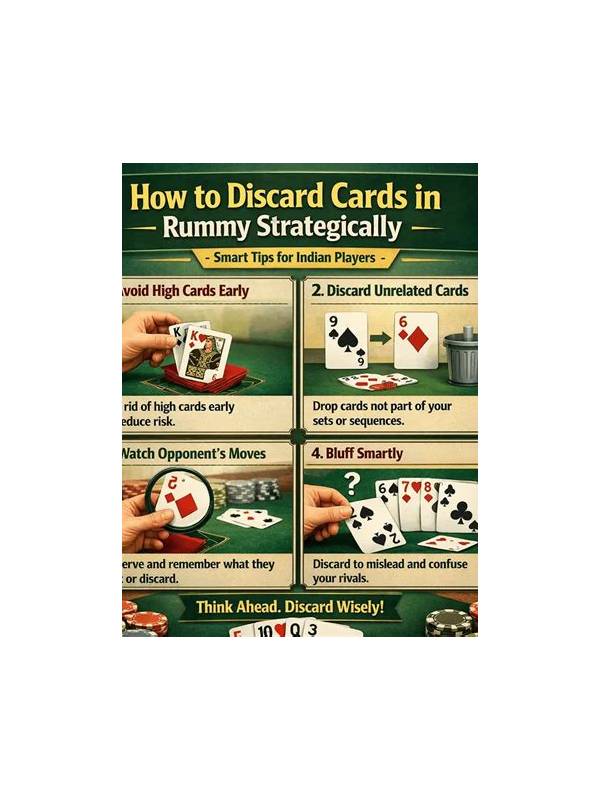
An awkward card is not always the highest card in your hand. It is often the card that has few realistic partners and competes with too many other plans. Instead of repeatedly asking which card is worst, build a small discard queue. Put two or three candidates in order, then update that order after every draw. The queue turns a vague problem into a manageable plan while leaving room for new information.
Begin with a quick inventory. Mark completed groups, promising connectors, pairs, and isolated cards. A card belongs near the front of the queue when it has high points, few useful neighbors, and no role in a required sequence. A low isolated card may still be harmless, while a lone queen can be costly if it remains until the end. Avoid ranking cards by face value alone; connection and flexibility matter just as much.
Next, test each candidate against the open discard pile and the likely draw options. Discarding a card that visibly helps an opponent can be worse than keeping it for another turn. Likewise, a card may look isolated only because you have not considered a second suit route. Before moving a candidate to the top, ask whether one natural draw could give it a useful role and whether that draw is realistic enough to justify waiting.
Keep the queue short. A list of seven “bad” cards is not a plan because it ignores the groups you are trying to build. Two candidates and one reserve are usually enough. The reserve is the card you can release if the next draw makes your preferred discard useful. This structure also prevents tunnel vision: you can change the queue when the table reveals new information rather than defending an old ranking.
At the end of the hand, compare the original queue with the actual discard order. Did you keep a high card because it felt promising? Did an opponent’s discard make the queue obsolete? Did you discard the right card but at the wrong time? These questions improve future judgment. A discard queue is not a prediction of the whole hand; it is a simple way to reduce clutter, control points, and preserve attention for the decisions that matter most. Do not let the queue become an excuse to discard automatically. Before releasing the top candidate, verify that it is not part of a mandatory group and that the open pile has not changed the context. If the card has gained value, demote it and promote the next candidate. The queue should simplify decisions while remaining responsive to public information. Its value comes from being updated, not from being obeyed mechanically.
Related Post
Rummy Tips: Use a Score Sheet That Explains the Round
A compact score sheet can preserve the decisions and context behind every rummy result. [...]
Rummy How-To: Mark Flexible and Rigid Cards in Your Hand
Classifying cards by how many useful roles they have can simplify difficult draws and discards. [...]