Rummy Tips: Build a Better Table-Side Vocabulary
Players often describe a rummy hand with vague phrases such as “almost ready” or “that card feels good.” Those phrases are natural, but they can hide the reason for a decision. A simple table-side vocabulary helps you think clearly, explain a move, and learn from the result without turning the game into a lecture.
Begin with three categories: confirmed, possible, and dead. A confirmed group is a valid meld under the table rules. A possible group is a collection that could become useful if one or two cards arrive. A dead card is currently difficult to connect and has no clear defensive value. These labels describe the state of your cards, not the quality of your luck. Recheck them after every draw.
Add the word “route” for a complete plan from your current hand to a legal declaration. You may have a sequence route, a set route, or a mixed route. Calling something a route forces you to ask what still has to happen. If a plan needs one specific card from a shrinking pool, say “narrow route.” If several cards can finish it, say “wide route.” The distinction is more helpful than saying a hand is simply strong or weak.
Use “anchor” for a group you intend to keep while reorganizing the rest of the hand. A pure sequence can be an anchor, but so can a flexible pair if it connects to several possibilities. Use “release card” for a card you are willing to discard once it no longer supports an active route. This wording prevents a common mistake: keeping a card because it was once part of a promising idea.
Finally, separate “fact” from “read.” A fact might be that a seven of hearts was discarded. A read might be that the discard was unnecessary to its owner. Say both explicitly in your notes or thoughts. The vocabulary is not meant to make casual play formal. It is a lightweight tool for reducing confusion, especially when several combinations compete for the same card. Clear words lead to clear reviews and more repeatable decisions.
Related Post
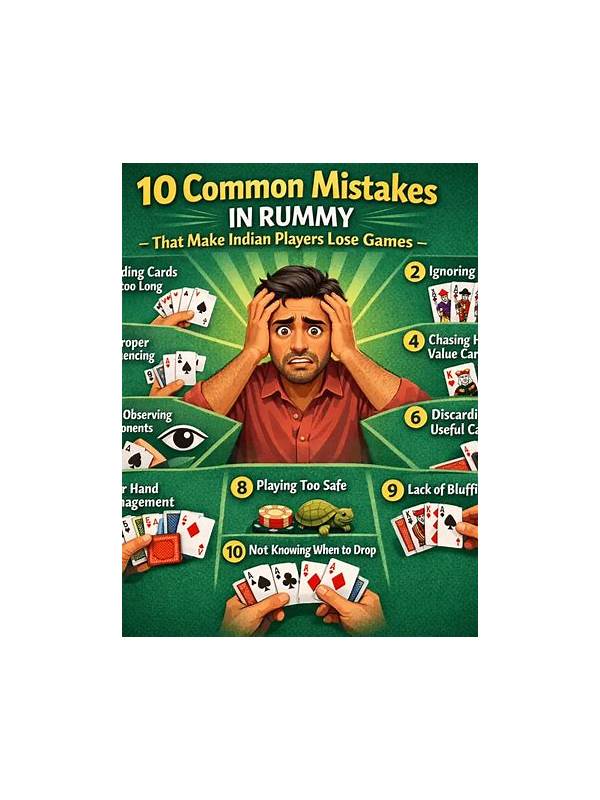
Rummy Beginner Mistakes: Build a Personal Warning List
Rummy Beginner Mistakes: Build a Personal Warning List offers practical guidance for clearer, safer, and [...]
Rummy Strategy: Count Unused Cards in Each Candidate Group
Counting the cards that a plan leaves without a role helps distinguish efficient groupings from [...]