Rummy How-To: Create a Small Checklist for the Final Turns

The final turns of a rummy hand deserve a different rhythm from the opening. Early play is about discovering possibilities; late play is about verifying that the chosen arrangement is legal, complete, and affordable if the round ends unexpectedly. A small checklist can prevent avoidable mistakes without slowing every decision.
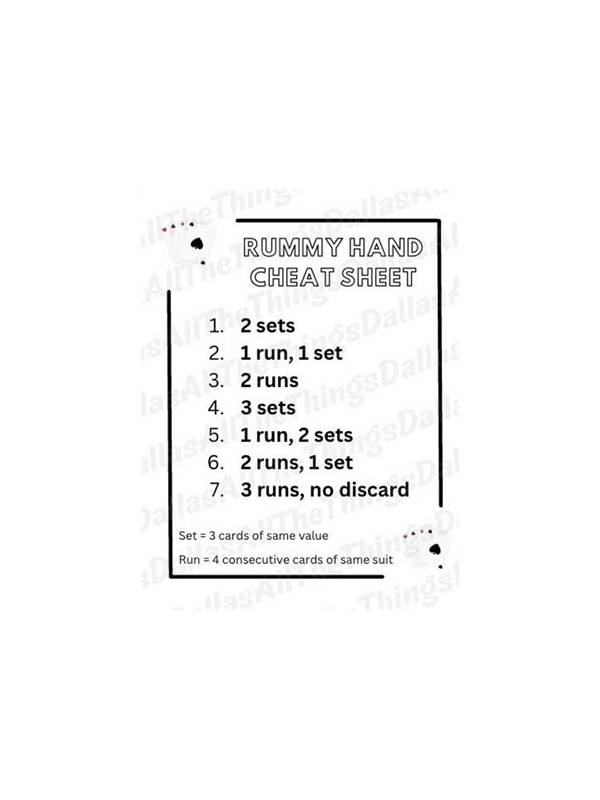
Begin by checking your required structures. Identify which group is already complete and which group still needs attention. In formats that require a pure sequence or another specific combination, verify that requirement explicitly rather than assuming the hand looks organized. A hand can contain several attractive sets and still fail the basic declaration rule.
Next inspect every card that is not assigned. Do not leave a “temporary” card floating between groups. Assign it to a plausible group or identify it as the next discard. If two groups are competing for one card, decide which group has the stronger completion path. This is especially important when a joker or wild card appears to make both arrangements look possible.
Then review the discard choice. A late discard should have a clear reason: it is unassigned, it has high penalty value, or it offers the opponent little useful information. Avoid discarding a card solely because it is not immediately needed; it may be the only card protecting a flexible fallback. Check your hand once after the discard so that the remaining arrangement is easy to read.
Before declaring, count the cards and inspect each run in order. Read a sequence from its lowest rank to its highest, and read a set by rank and suit. Look for duplicated cards, missing ranks, and a wild card being used outside the format’s rules. A slow verification is cheaper than an invalid declaration caused by a visual assumption.
The checklist should fit on one short note: required structure, unassigned cards, discard reason, card count, and final legality. Use it only near the end, when the hand is close to complete. Overchecking every turn can create hesitation, but a deliberate final pass turns a promising hand into a dependable one. After the round, record which checklist item caught an error or confirmed a good decision so the process improves over time.
If the platform highlights possible groups automatically, treat those highlights as suggestions rather than confirmation. Arrange the cards yourself and read the rules that define a valid hand. Interface assistance can miss a required natural group or allow you to overlook an unassigned card. The final checklist belongs to the player, even when the screen offers helpful sorting tools.
Related Post

Rummy Guide: Measure Options Before Choosing a Meld
Two hands can show equal progress while differing greatly in the number of realistic next [...]
Rummy Tips: Count Waiting Cards Without Losing the Big Picture
Learn how to use waiting-card counts as one decision signal instead of treating them as [...]