Rummy Comparison: Early Melds Versus Hidden Potential
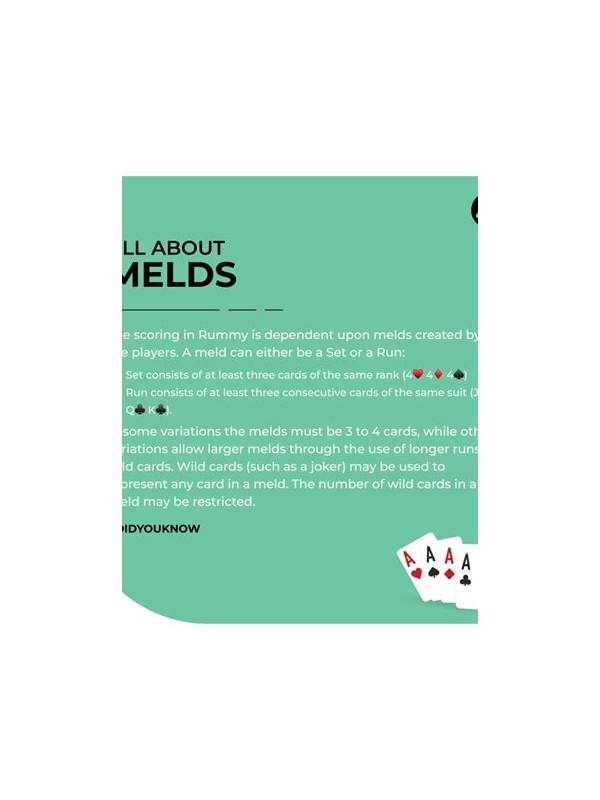
Players often face a choice between laying down a valid meld early and keeping the cards concealed while searching for a stronger arrangement. The right answer depends on the rules, the penalty system, and what the meld reveals. There is no universal benefit to either approach, so compare the practical value of progress with the information cost.
An early meld reduces the number of unorganized cards in your hand. That can make later decisions easier and may protect a sequence that would otherwise be accidentally discarded. It also provides a clear base for adding cards. In a format where a valid declaration requires specific structures, securing one of them early can reduce the chance of a last-minute mistake.
Keeping cards hidden can preserve flexibility. Two cards that fit a sequence might also join a set, and committing them too soon can remove that alternative. Concealment may also make your discards less informative. However, hidden potential is useful only when the alternatives are genuinely practical. A hand full of imagined routes is not stronger than a hand with one confirmed meld and a clear plan.
Use three questions before choosing. Does the meld satisfy an important requirement? How many realistic routes disappear if I commit these cards? What penalty do the remaining unorganized cards carry if the round ends? If the meld answers the first question and costs little flexibility, revealing it is usually sensible.
Avoid treating concealment as a clever tactic by itself. The objective is to reduce risk and finish a legal hand, not to keep every option secret. Conversely, do not lay down every possible group simply because it feels tidy. Preserve a useful connector when it has multiple routes and the current meld is not under pressure.
The comparison becomes easier with practice logs. Record the hand shape, the route you chose, and the alternative you rejected. Later, note whether the decision improved your options or merely looked attractive. This separates sound planning from hindsight and helps you build a personal rule for when early progress deserves priority.
The comparison can change as the round advances. Early on, preserving a flexible pair may be reasonable because there is time to improve it. Later, the same pair may be inferior to a completed meld because the remaining exposure is too high. Recalculate rather than applying an opening strategy to the endgame. Continue checking unorganized cards and legal requirements. This prevents early optimism from becoming an endgame rule.
Related Post
Points Rummy or Pool Rummy: Which Format Fits Your Evening?
Comparing time, scoring, and pressure can help players choose between points and pool rummy. [...]
Rummy Tips: Use Short Timeouts to Protect Decision Quality
A brief, planned pause can prevent rushed rummy choices while keeping a session within its [...]